
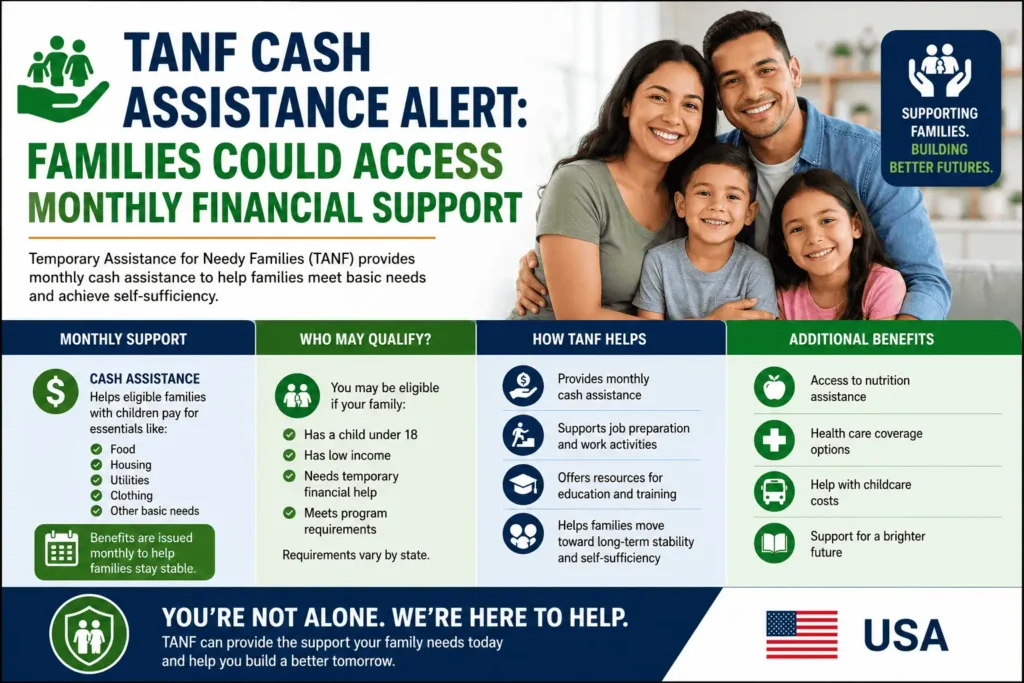
For many families across the United States, covering basic monthly expenses has become increasingly difficult. Rising costs for groceries, rent, childcare, transportation, and utilities continue to strain household budgets, especially for parents raising children on limited incomes. Fortunately, the Temporary Assistance for Needy Families (TANF) program offers financial support that can help eligible families meet their essential needs while working toward greater financial stability.
If you have children and are experiencing financial hardship, you may qualify for monthly cash assistance through TANF. The program is designed to provide temporary financial relief while helping recipients prepare for employment, gain job skills, and achieve long-term self-sufficiency.
Many Americans are unaware that TANF benefits are available in every state, although eligibility rules and payment amounts vary depending on where you live. Understanding how the program works could help you determine whether your family qualifies for monthly assistance.
Here’s everything you need to know about TANF cash assistance in 2026.
What Is TANF?
Temporary Assistance for Needy Families, commonly referred to as TANF, is a federally funded program administered by individual states, territories, and tribal governments. Unlike Social Security or Supplemental Security Income (SSI), TANF is specifically designed to provide temporary financial assistance to families with dependent children who have limited income and resources.
The program was created to help families become financially independent by combining monthly cash assistance with employment services, job training, education programs, childcare support, and other resources.
Because each state manages its own TANF program, eligibility requirements, benefit amounts, and application procedures may differ from one state to another.
Who May Qualify for TANF?
Although every state has its own guidelines, many applicants must meet several common eligibility requirements.
Generally, you may qualify if you:
- Have one or more dependent children living with you.
- Are pregnant and expecting a child.
- Have limited household income.
- Meet your state’s residency requirements.
- Are a U.S. citizen or qualify under eligible immigration categories.
- Meet resource and financial eligibility guidelines established by your state.
Some states also require adults receiving TANF to participate in work-related activities unless they qualify for an exemption.
How Much Financial Assistance Can Families Receive?
Monthly TANF benefits vary significantly depending on several factors, including:
- The state where you live.
- Household size.
- Family income.
- Number of dependent children.
- Other financial resources available to the household.
Because states determine their own payment schedules, benefit amounts can range from modest monthly assistance to larger payments for families with several children.
Some states also provide additional supportive services that are separate from the monthly cash benefit.
What Can TANF Benefits Be Used For?
TANF cash assistance is intended to help families meet essential living expenses.
Common uses include:
- Paying rent or housing costs.
- Purchasing groceries.
- Covering utility bills.
- Buying clothing for children.
- Transportation expenses.
- School supplies.
- Household necessities.
- Personal care items.
Because TANF provides cash assistance rather than food-specific benefits, recipients generally have flexibility in using the funds for eligible household needs.
Employment and Job Training Services
One of the primary goals of TANF is helping families achieve financial independence through employment.
Many state TANF agencies offer services such as:
- Job search assistance.
- Resume preparation.
- Interview coaching.
- Career counseling.
- Vocational training.
- Adult education.
- GED preparation.
- Employment placement services.
These programs are intended to help recipients secure stable employment while receiving temporary financial assistance.
Childcare Support
For many parents, finding affordable childcare is one of the biggest obstacles to returning to work.
Many TANF programs help eligible families access childcare assistance while parents:
- Work.
- Attend job training.
- Participate in educational programs.
- Complete required employment activities.
Affordable childcare can make it easier for parents to maintain employment and increase household income over time.
Time Limits on Benefits
Unlike some federal assistance programs, TANF is generally intended to provide temporary support.
Federal law establishes a lifetime limit of 60 months of federally funded TANF assistance for many families, although states may establish shorter limits or allow certain exceptions under specific circumstances.
Families experiencing significant hardships may qualify for exemptions in some situations, depending on state policies.
Work Requirements
Most adults receiving TANF are expected to participate in work-related activities.
These activities may include:
- Working at a job.
- Job searching.
- Vocational education.
- Community service.
- Employment training.
- Work experience programs.
States establish participation requirements and monitor recipients’ compliance with program rules.
Individuals who cannot work because of disability, caregiving responsibilities, or other qualifying circumstances may be exempt from certain requirements.
Can You Receive TANF and Other Benefits?
Yes.
Many families receive TANF along with other public assistance programs.
Depending on eligibility, households may also qualify for:
- Supplemental Nutrition Assistance Program (SNAP).
- Medicaid.
- Children’s Health Insurance Program (CHIP).
- Women, Infants, and Children (WIC) benefits.
- Housing assistance.
- Energy assistance programs.
Receiving one benefit does not automatically prevent someone from qualifying for another, although household income is considered when determining eligibility.
How Do You Apply?
Applications are typically submitted through your state’s human services or social services agency.
The application process often includes:
- Completing an application form.
- Providing proof of identity.
- Verifying household income.
- Confirming residency.
- Providing birth certificates for children.
- Supplying Social Security numbers when required.
- Participating in an eligibility interview.
Some states allow online applications, while others also offer in-person appointments or mail-in options.
Documents You May Need
Preparing documents before applying can help speed up the approval process.
Common documents include:
- Government-issued identification.
- Proof of income.
- Recent pay stubs.
- Bank statements.
- Lease agreement or proof of residence.
- Utility bills.
- Birth certificates for dependent children.
- Social Security cards.
- Immigration documentation, if applicable.
Additional documents may be requested depending on your state’s requirements.
Common Reasons Applications Are Denied
Not every TANF application is approved.
Some common reasons include:
- Household income exceeds state limits.
- Missing required documentation.
- Failure to attend an eligibility interview.
- Household resources exceed allowable limits.
- Failure to comply with work participation requirements.
- Incomplete application information.
Applicants who receive a denial may have the opportunity to appeal the decision if they believe an error occurred.
Why TANF Matters in 2026
As inflation continues to impact everyday expenses, TANF remains an important source of temporary financial support for families facing economic hardship.
Monthly cash assistance can help parents maintain stable housing, purchase necessities, and focus on finding employment without facing immediate financial crisis.
Combined with employment services, education opportunities, and childcare assistance, TANF provides more than just monthly payments—it offers families a pathway toward greater financial independence.
Frequently Asked Questions
Is TANF available in every state?
Yes. Every state administers a TANF program, although eligibility rules, payment amounts, and application procedures differ.
Do I need to have children to qualify?
In most cases, TANF is intended for families with dependent children or pregnant individuals who meet state eligibility requirements.
How long can I receive benefits?
Many families are subject to a lifetime limit of 60 months of federally funded TANF assistance, although states may have different rules or exceptions.
Can I work while receiving TANF?
Yes. In fact, many recipients are required to participate in employment or work-related activities as part of the program.
Does TANF affect other benefits?
It depends. Your eligibility for other assistance programs is determined separately, although household income is considered when evaluating benefits.
Tips for Families Considering TANF
If you believe your family may qualify, consider these helpful steps before applying:
- Gather all required documents in advance.
- Review your state’s eligibility guidelines carefully.
- Report all household income accurately.
- Attend scheduled interviews promptly.
- Respond quickly if additional information is requested.
- Keep copies of all documents submitted.
Being organized can help reduce delays and improve the application process.
Final Thoughts
For families struggling to make ends meet, the Temporary Assistance for Needy Families (TANF) program can provide valuable monthly financial support while helping parents move toward long-term economic stability. Through a combination of cash assistance, employment services, childcare support, and educational opportunities, TANF offers more than temporary relief—it helps families build a stronger financial future.
If your household is experiencing financial hardship and includes dependent children, it may be worthwhile to explore whether you qualify for TANF benefits in your state. Understanding the eligibility requirements, preparing the necessary documentation, and applying through your local agency could open the door to monthly financial assistance that helps cover essential living expenses while you work toward greater financial independence.
Families may qualify for monthly TANF cash assistance if they meet income requirements and state-specific eligibility rules, providing temporary financial support for basic needs.
CHECK HERE FOR TANF BENEFITS AND INFORMATION IN THE UNITED STATES
- TANF Program Overview 🇺🇸
- Apply for Cash Assistance 🇺🇸
- Find TANF Eligibility by State 🇺🇸
- Family Assistance Resources 🇺🇸