
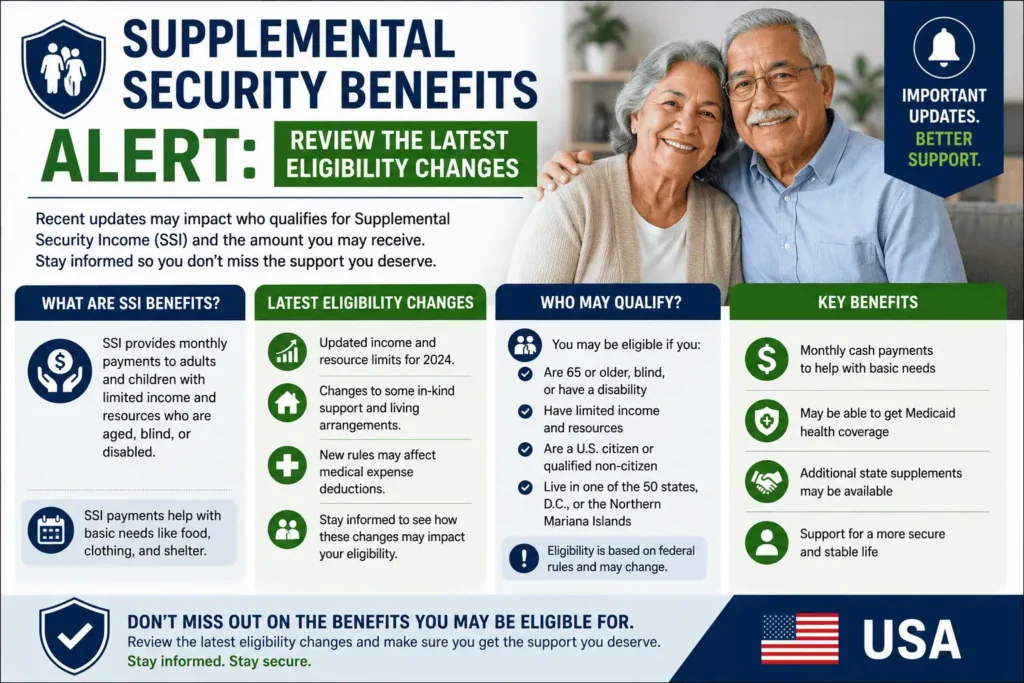
Millions of Americans depend on Supplemental Security Income (SSI) to help pay for basic living expenses such as housing, food, utilities, and healthcare. As 2026 brings updated federal payment amounts, annual inflation adjustments, and evolving Social Security Administration policies, beneficiaries and new applicants alike are asking an important question: Could the latest eligibility changes affect my benefits?
Whether you already receive Supplemental Security Income or you’re considering applying for the first time, understanding the newest eligibility rules can help ensure you don’t miss out on valuable monthly financial assistance.
Although the SSI program continues to provide essential support for low-income seniors, individuals with disabilities, and people who are blind, several annual updates—including higher payment amounts, revised income thresholds, and administrative changes—could impact who qualifies and how much eligible recipients receive.
Here’s what you need to know about the latest Supplemental Security Income eligibility updates in 2026.
What Is Supplemental Security Income (SSI)?
Supplemental Security Income (SSI) is a federal program administered by the Social Security Administration (SSA). It provides monthly financial assistance to individuals with limited income and limited financial resources.
Unlike Social Security retirement or Social Security Disability Insurance (SSDI), SSI is not based on your work history or the amount of Social Security taxes you have paid during your career.
Instead, eligibility depends primarily on:
- Financial need.
- Age.
- Disability status.
- Blindness.
- Citizenship or qualifying immigration status.
- Living arrangements.
The purpose of SSI is to help eligible individuals pay for basic necessities such as food, clothing, and shelter.
What’s New for 2026?
One of the biggest updates for 2026 is the annual 2.8% Cost-of-Living Adjustment (COLA), which increases federal SSI payments to help beneficiaries keep pace with inflation. The adjustment applies automatically to eligible recipients and began with payments issued at the end of December 2025 for January 2026 benefits.
In addition to higher monthly payments, applicants should be aware that eligibility reviews continue to consider income, resources, and living arrangements under current SSA rules.
Higher Federal Monthly Payments
Because of the 2026 COLA increase, the maximum federal SSI payment amounts have increased.
For 2026, eligible recipients may receive up to:
- $994 per month for an eligible individual.
- $1,491 per month for an eligible couple.
- $498 per month for an essential person, where applicable.
These figures represent the federal maximum benefit. Actual monthly payments vary depending on each person’s financial situation.
Some states also provide supplemental payments, meaning recipients in those states may receive more than the federal benefit.
Who Can Qualify?
SSI serves several groups of Americans with limited financial resources.
Generally, applicants must fall into one of the following categories:
- Adults age 65 or older.
- Individuals who are blind.
- Adults with qualifying disabilities.
- Children with qualifying disabilities.
In addition, applicants must satisfy financial eligibility requirements established by the Social Security Administration.
Income Still Matters
One of the most important eligibility factors is income.
The Social Security Administration reviews many different types of income, including:
- Wages from employment.
- Self-employment income.
- Social Security benefits.
- Pension income.
- Unemployment compensation.
- Certain gifts or financial support.
- In-kind support such as free food or housing in some situations.
However, not every dollar received counts toward SSI eligibility.
The SSA excludes certain income when calculating benefits, allowing some applicants to remain eligible even if they receive modest earnings or other assistance.
Resource Limits Continue to Apply
In addition to income, applicants must meet resource limits.
Countable resources generally include:
- Cash.
- Checking accounts.
- Savings accounts.
- Stocks.
- Bonds.
- Certain investments.
- Additional real estate.
Fortunately, several important assets usually do not count toward SSI eligibility.
These often include:
- Your primary residence.
- One vehicle used for transportation.
- Personal belongings.
- Household furniture.
- Certain burial funds.
Because every financial situation is different, applicants should carefully review current SSA rules before applying.
Living Arrangements May Affect Payments
Where you live—and who pays your housing expenses—can affect the amount of SSI you receive.
For example, benefits may differ if you:
- Live alone.
- Live with relatives.
- Receive free housing.
- Live in certain medical or residential facilities.
The Social Security Administration evaluates living arrangements because they can affect a person’s financial need under SSI rules.
Applicants should report any changes promptly to avoid payment adjustments or overpayments.
Can You Work and Still Receive SSI?
Yes.
Many people believe working automatically ends SSI benefits, but that is not always true.
The SSI program includes several work incentives that allow eligible recipients to earn income while continuing to receive partial benefits.
Depending on earnings, monthly payments may gradually decrease rather than stop immediately.
This approach encourages recipients to pursue employment while maintaining financial support during the transition.
Children Can Also Qualify
SSI is not limited to adults.
Children with qualifying disabilities may also receive monthly benefits if their family’s income and resources fall within program limits.
When evaluating children, the Social Security Administration considers both the child’s medical condition and the household’s financial circumstances.
Parents applying on behalf of a child should be prepared to provide detailed medical and financial documentation.
State Supplemental Payments
Many people are surprised to learn that some states provide additional monthly SSI payments beyond the federal benefit.
State supplements vary considerably.
Factors affecting supplemental payments may include:
- State of residence.
- Living arrangements.
- Disability status.
- Residential care needs.
As a result, recipients with similar financial circumstances may receive different monthly benefit amounts depending on where they live.
Reporting Changes Is Essential
Current beneficiaries are required to report changes that may affect eligibility.
Examples include:
- Starting or leaving a job.
- Changes in wages.
- Marriage or divorce.
- Moving to a new address.
- Receiving other benefits.
- Changes in household members.
- Changes in financial resources.
Reporting changes promptly helps reduce the risk of overpayments that could later require repayment.
Common Reasons Applications Are Denied
Although many applicants qualify for SSI, some applications are denied.
Common reasons include:
- Income exceeding eligibility limits.
- Resources above allowable limits.
- Insufficient medical evidence.
- Failure to meet disability requirements.
- Missing documentation.
- Incomplete application forms.
- Failure to cooperate during the review process.
Applicants who receive a denial generally have the right to appeal the decision.
Documents You May Need
Preparing documentation before applying can make the process smoother.
Helpful documents may include:
- Government-issued identification.
- Birth certificate.
- Social Security number.
- Medical records.
- Bank statements.
- Proof of income.
- Housing information.
- Employment records.
- Immigration documentation, if applicable.
Providing complete and accurate information can help reduce delays in processing your application.
Can You Receive SSI With Other Benefits?
Yes.
Some individuals qualify for both SSI and other government benefits.
For example, certain recipients receive both:
- Social Security retirement benefits.
- Social Security Disability Insurance (SSDI).
- Medicaid.
- Supplemental Nutrition Assistance Program (SNAP).
- State assistance programs.
Eligibility for one program does not automatically disqualify someone from another, although income from other benefits may affect the SSI payment amount.
Frequently Asked Questions
Do I need to reapply because of the 2026 changes?
No. Current SSI recipients generally do not need to submit a new application to receive the annual COLA increase. Eligible payments are adjusted automatically.
Will everyone receive the maximum payment?
No. The federal maximum payment is available only to individuals whose financial circumstances qualify. Many recipients receive lower amounts because of countable income or living arrangements.
Can I qualify if I have never worked?
Yes. SSI is based on financial need rather than work history.
Can I work while receiving SSI?
Yes. Many recipients continue working while receiving partial SSI benefits through the program’s work incentive rules.
Do all states pay the same amount?
No. While the federal benefit is the same nationwide, some states provide additional supplemental payments that increase total monthly benefits.
Tips Before Applying
If you’re considering applying for SSI in 2026, these steps may help simplify the process:
- Gather all financial documents before starting.
- Organize your medical records.
- Review current income and resource requirements.
- Respond promptly to SSA requests for information.
- Keep copies of everything you submit.
- Report any changes in your financial or living situation as soon as possible.
Being well prepared can help reduce delays and improve the overall application experience.
Final Thoughts
The 2026 updates to Supplemental Security Income bring higher federal payment amounts through the annual Cost-of-Living Adjustment while maintaining the program’s focus on helping older adults, individuals with disabilities, and people who are blind who have limited income and resources.
If you already receive SSI, reviewing the latest rules can help ensure your payments remain accurate. If you have never applied but believe you may qualify, understanding the current eligibility requirements, income limits, and documentation needed could be the first step toward accessing valuable monthly financial assistance.
Staying informed about annual SSI updates, reporting changes promptly, and understanding how income and resources affect eligibility can help you maximize the benefits available through one of the nation’s most important financial assistance programs.
New SSI eligibility updates may affect your benefits as recent policy changes and income/resource limits continue to be enforced, including stricter asset verification and updated earning thresholds for 2026.
CHECK HERE FOR SSI BENEFITS AND ELIGIBILITY UPDATES IN THE UNITED STATES
- SSI Program Overview 🇺🇸
- SSI Eligibility Requirements 🇺🇸
- What’s New for SSI in 2026 🇺🇸
- Find Additional Assistance Programs 🇺🇸