
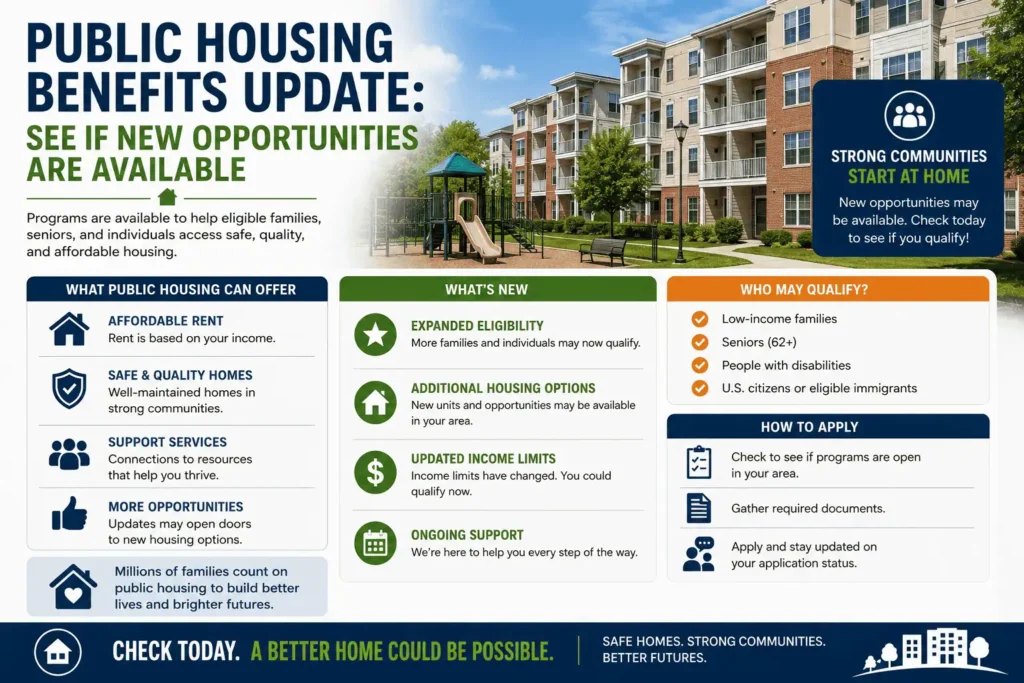
Finding affordable housing continues to be a major challenge for millions of households across the United States. With rental prices increasing in many communities, families, seniors, individuals with disabilities, and low-income households are searching for programs that can help them secure safe and stable housing at a more affordable cost.
One of the most important resources available is the Public Housing Program, a federally supported housing assistance option designed to provide affordable rental opportunities for eligible households. While demand remains high and waiting lists can be long, new opportunities may become available as local housing authorities update their programs, open waiting lists, add available units, or receive funding to support additional housing assistance.
If you have been waiting for affordable housing options or have never applied before, now may be a good time to learn how public housing works, who may qualify, and how to prepare when new application opportunities become available.
What Is Public Housing?
Public housing is a rental assistance program created to provide safe and affordable housing for eligible low-income families, seniors, and individuals with disabilities.
The program is funded by the U.S. Department of Housing and Urban Development (HUD) and managed locally by Public Housing Agencies (PHAs).
Unlike the Housing Choice Voucher Program, where tenants typically rent from private landlords using rental assistance, public housing consists of properties that are owned or managed by local housing authorities.
These properties may include:
- Apartment buildings.
- Townhomes.
- Family housing communities.
- Senior housing developments.
- Accessible housing units for individuals with disabilities.
The goal of public housing is to help eligible residents maintain stable housing while paying an affordable portion of their income toward rent.
Why Are New Opportunities Important?
Public housing is highly competitive because many households need affordable housing assistance.
Many housing authorities maintain waiting lists because the number of applicants is often greater than the number of available units.
However, opportunities can appear when:
- New housing units become available.
- Waiting lists reopen.
- Current residents move out.
- Housing authorities receive additional resources.
- Local programs expand services.
Some housing authorities periodically announce new application periods, giving families another opportunity to apply.
Because openings are not always available for long periods, staying informed can help applicants avoid missing important deadlines.
Who May Qualify for Public Housing?
Eligibility requirements vary by location, but applicants are generally evaluated based on several factors.
Common eligibility considerations include:
- Household income.
- Family size.
- Citizenship or eligible immigration status.
- Rental history.
- Background screening requirements.
- Local housing authority policies.
Public housing commonly serves:
- Low-income families.
- Older adults.
- Individuals with disabilities.
- Households experiencing financial hardship.
- People who need affordable rental options.
Each Public Housing Agency establishes its own application procedures and preferences.
Income Requirements
Income is one of the most important factors when applying for public housing.
HUD establishes income guidelines, and local housing authorities use these limits to determine eligibility.
Income limits may depend on:
- Location.
- Number of people in the household.
- Local housing costs.
- Annual income levels.
A household that qualifies in one city may not qualify in another because housing markets and income limits differ across the country.
Applicants should check the requirements of their local housing authority for the most accurate information.
How Much Rent Do Public Housing Residents Pay?
Rent calculations vary depending on household circumstances and local rules.
In many cases, rent is based on a percentage of household income.
This means eligible residents generally pay an affordable amount rather than the full market rental rate.
The exact amount may depend on:
- Household income.
- Allowable deductions.
- Family size.
- Utility expenses.
This structure helps ensure that housing costs remain manageable for qualifying households.
Who Often Receives Priority?
Because demand is high, some housing authorities establish preferences for households with urgent housing needs.
Priority groups may include:
- Seniors.
- Individuals with disabilities.
- Families with children.
- Veterans.
- Households facing homelessness.
- Victims of domestic violence.
Preferences vary by location and are determined by local housing agencies.
Meeting a preference does not guarantee immediate placement, but it may affect an applicant’s position on a waiting list.
How Do You Apply for Public Housing?
Applications are submitted through the Public Housing Agency that serves your area.
Depending on the location, applications may be available through:
- Online portals.
- Paper applications.
- Housing authority offices.
- Scheduled appointments.
The application usually requires information about:
- Household members.
- Income sources.
- Employment.
- Current housing situation.
- Contact information.
After applying, eligible applicants are usually placed on a waiting list until housing becomes available.
Documents You May Need
Preparing documents before applying can make the process easier.
Commonly requested information may include:
- Government-issued identification.
- Birth certificates.
- Social Security numbers.
- Proof of income.
- Employment information.
- Benefit award letters.
- Bank information.
- Rental history.
- Contact information.
Requirements may vary depending on the housing authority.
Keeping copies of submitted documents is also helpful for future reference.
What Happens After Applying?
Submitting an application does not usually mean immediate placement.
The housing authority reviews eligibility and places approved applicants on a waiting list.
When housing becomes available, the agency may contact applicants to:
- Confirm current information.
- Verify income.
- Request updated documents.
- Schedule an interview.
- Complete final eligibility steps.
It is extremely important to keep your contact information updated while waiting.
Missing a letter, email, or phone call could result in losing your place on the waiting list.
Can Working Families Apply?
Yes.
A common misconception is that public housing is only for unemployed individuals.
Many working families qualify because eligibility is based on income levels rather than employment status alone.
Households may still struggle with affordable housing even while working due to:
- Low wages.
- Rising rent prices.
- Childcare expenses.
- Medical costs.
- Increased household expenses.
If your income falls within program limits, employment does not automatically prevent you from applying.
Can Seniors and Individuals With Disabilities Receive Assistance?
Yes.
Public housing includes options specifically designed to support older adults and individuals with disabilities.
Some properties offer:
- Accessible units.
- Supportive services.
- Safety features.
- Community resources.
These housing options can help residents maintain independence while living in safe and affordable environments.
Are Waiting Lists Opening Soon?
Waiting list openings depend on each local housing authority.
Some agencies keep lists open continuously, while others close applications when demand becomes too high.
New opportunities may become available when agencies:
- Need additional applicants.
- Open specific housing developments.
- Expand available units.
- Adjust their housing programs.
For example, some housing authorities periodically announce openings for specific properties or communities when vacancies become available.
Checking your local housing authority website regularly is one of the best ways to stay informed.
Public Housing Improvements and Updates
Public housing programs continue to evolve as housing authorities work to maintain properties, improve services, and expand housing opportunities.
HUD supports various initiatives focused on improving public housing conditions, modernizing properties, and helping communities provide better housing options for residents.
Housing authorities may use funding for:
- Property repairs.
- Building improvements.
- Safety upgrades.
- Resident services.
- Community improvements.
These efforts help preserve affordable housing resources for future generations.
Common Reasons Applications Are Delayed or Denied
Some applications may experience delays because of:
- Missing documents.
- Incomplete information.
- Difficulty contacting applicants.
- Failure to update information.
- Income changes that affect eligibility.
Applications may also be denied if applicants do not meet program requirements.
Providing accurate information and responding quickly to requests can help prevent unnecessary delays.
Frequently Asked Questions
Is public housing available in every state?
Yes. Public housing programs operate throughout the United States, but availability depends on local housing authorities and available units.
Does applying guarantee housing?
No. Because demand is high, eligible applicants are usually placed on waiting lists until housing becomes available.
Can I apply if I already have a job?
Yes. Working households may qualify if they meet income and program requirements.
Can I choose where I live?
Applicants generally apply through the housing authority serving their area. Housing choices depend on available properties and openings.
How long does the waiting process take?
Waiting times vary widely depending on location, demand, and available housing units.
Tips to Improve Your Chances
If you are interested in public housing opportunities, consider these steps:
- Apply as soon as waiting lists open.
- Check housing authority announcements regularly.
- Keep your phone number and address updated.
- Gather important documents in advance.
- Apply to multiple eligible programs when possible.
- Respond quickly to requests from housing agencies.
Being prepared can make the process smoother and help prevent missed opportunities.
Why Public Housing Remains Important
Affordable housing plays a critical role in helping families maintain stability. Without assistance, many households may face difficult choices between paying rent and covering other essential expenses such as food, healthcare, transportation, and childcare.
Public housing provides a foundation that allows eligible residents to maintain safe housing while managing their financial responsibilities.
For many seniors, families, and individuals with disabilities, access to affordable housing can provide security, independence, and peace of mind.
Final Thoughts
Public Housing Benefits continue to provide important support for eligible households across the United States. While demand remains high and waiting lists can sometimes be lengthy, new opportunities may become available as housing authorities update their programs, open applications, and manage available units.
If you are searching for affordable housing assistance, now is a good time to review your local housing authority’s requirements, gather your documents, and monitor announcements for future openings.
A new application opportunity could become available when you least expect it, and being prepared may help you take advantage of the next chance to access affordable housing support in your community.
New public housing opportunities may be available for eligible low-income families, seniors and individuals with disabilities through local housing authorities and government assistance programs.
CHECK HERE FOR PUBLIC HOUSING BENEFITS IN THE UNITED STATES
- Public Housing Information 🇺🇸
- Find Local Housing Authorities 🇺🇸
- Apply for Housing Assistance 🇺🇸
- Check Eligibility for Housing Benefits 🇺🇸