
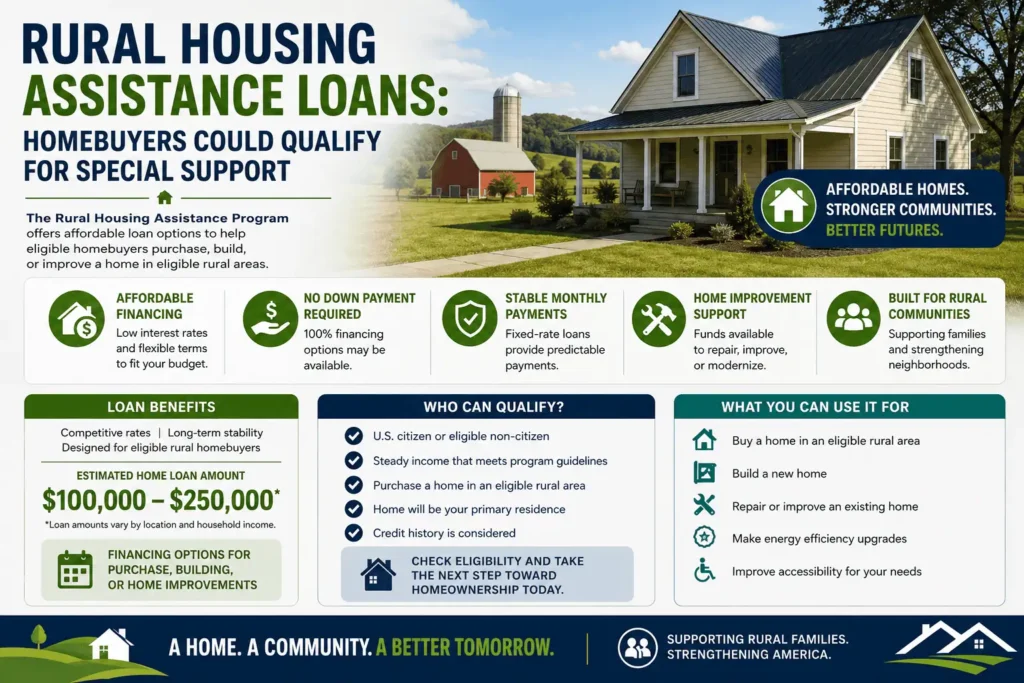
For many Americans, owning a home can feel out of reach due to rising home prices, higher interest rates, and the challenge of saving enough money for a down payment. However, families and individuals looking to purchase a home in eligible rural areas may have access to special programs designed to make homeownership more affordable.
The USDA Rural Housing Loan Program, also known as the Rural Development Housing Assistance Program, helps qualified homebuyers purchase, build, repair, or improve homes in eligible rural communities. Through government-backed support, the program offers opportunities that may reduce some of the financial barriers that prevent people from becoming homeowners.
Many potential buyers are surprised to learn that they may qualify for rural housing assistance even if they are not farmers or do not live in extremely remote locations. Thousands of small towns, suburban areas, and communities near larger cities may meet USDA eligibility requirements.
If you are considering buying a home and want to know whether special assistance may be available, understanding how rural housing loans work could help you discover new opportunities.
What Are Rural Housing Assistance Loans?
Rural Housing Assistance Loans are programs offered through the U.S. Department of Agriculture (USDA) Rural Development agency. These programs are designed to support affordable homeownership in eligible rural and suburban communities.
The most popular option is the Single Family Housing Guaranteed Loan Program, which helps approved lenders provide affordable mortgage options to eligible buyers.
Another option is the Single Family Housing Direct Loan Program, which provides assistance directly from USDA Rural Development for qualifying low- and very-low-income applicants.
These programs aim to:
- Increase homeownership opportunities.
- Support rural communities.
- Help families purchase safe and affordable homes.
- Improve housing conditions in eligible areas.
Unlike some housing assistance programs that focus only on rental support, USDA rural housing programs help eligible families become homeowners.
Who May Qualify?
Eligibility depends on several factors, including income, location, credit history, and the ability to repay a mortgage.
Applicants generally must:
- Meet USDA income requirements.
- Purchase a home in an eligible rural area.
- Use the property as their primary residence.
- Meet lender requirements.
- Be a U.S. citizen, qualified non-citizen, or meet applicable eligibility rules.
The program is not limited to a specific profession or occupation.
Teachers, healthcare workers, employees, families, and individuals from many different backgrounds may qualify if they meet the requirements.
What Makes USDA Rural Housing Loans Different?
One of the biggest advantages of USDA-backed loans is that they offer benefits that may not be available through traditional mortgages.
Depending on the program and applicant qualifications, benefits may include:
- No required down payment for eligible borrowers.
- Competitive interest rates.
- Reduced mortgage insurance costs compared with some other loan options.
- Flexible credit requirements.
- Assistance with closing costs in certain situations.
These features can make homeownership more accessible for buyers who have stable income but limited savings.
No Down Payment Option
Saving for a down payment is one of the biggest obstacles many homebuyers face.
Traditional mortgages often require thousands of dollars upfront, which can delay homeownership for years.
USDA Guaranteed Loans may allow eligible buyers to purchase a home with zero down payment.
This means qualified applicants may not need to save a large amount of money before purchasing an eligible property.
However, buyers should still consider other costs associated with purchasing a home, such as:
- Home inspections.
- Moving expenses.
- Property taxes.
- Insurance.
- Maintenance costs.
What Areas Are Considered Rural?
Many people assume USDA loans are only available in remote countryside locations, but that is not always true.
The USDA defines eligible areas based on population size, location, and other factors.
Some communities that qualify may include:
- Small towns.
- Rural neighborhoods.
- Areas outside major metropolitan centers.
- Certain suburban communities.
Because eligibility depends on the specific property address, buyers should check whether the home they are interested in purchasing qualifies.
Income Requirements
Income limits are an important part of USDA loan eligibility.
The program is intended to help households with low-to-moderate incomes purchase homes.
Income limits vary depending on:
- Location.
- Household size.
- Local housing costs.
A household that qualifies in one county may not qualify in another because income limits are adjusted based on regional economic conditions.
USDA considers the income of all household members when determining eligibility.
What Types of Homes Qualify?
Homes purchased through USDA programs must meet certain requirements.
Eligible properties generally must:
- Be used as the buyer’s primary residence.
- Meet safety and quality standards.
- Be located in an eligible rural area.
- Have adequate living conditions.
Eligible property types may include:
- Existing single-family homes.
- New construction homes.
- Certain manufactured homes.
- Properties needing approved repairs.
Investment properties and vacation homes generally do not qualify because the program is intended for primary residences.
Can First-Time Homebuyers Apply?
Yes.
USDA rural housing programs are available to both first-time and repeat homebuyers.
Many first-time buyers use USDA loans because the reduced upfront costs can make entering the housing market easier.
Applicants do not always need previous homeownership experience.
Credit Requirements
USDA loans may offer more flexible credit requirements compared with some conventional mortgage options.
However, lenders still evaluate an applicant’s financial situation.
Factors considered may include:
- Credit history.
- Income stability.
- Employment history.
- Existing debts.
- Ability to make monthly payments.
A stronger financial profile may improve approval opportunities and loan terms.
How Does the USDA Direct Loan Program Work?
The USDA Direct Loan Program is designed for eligible low- and very-low-income households who may not qualify for traditional mortgage financing.
Through this program, USDA provides assistance directly to approved borrowers.
Benefits may include:
- Payment assistance.
- Reduced monthly mortgage payments.
- Affordable financing options.
Eligibility requirements are typically more specific than those for guaranteed loans.
Can Existing Homeowners Receive Assistance?
Yes, some USDA programs also support homeowners who need help improving or repairing their homes.
Depending on eligibility, assistance may be available for:
- Home repairs.
- Safety improvements.
- Accessibility modifications.
- Removing health hazards.
These programs help preserve safe housing in rural communities.
How Do You Apply?
The application process usually begins by contacting a USDA-approved lender or local USDA Rural Development office.
Steps may include:
- Review eligibility requirements.
- Check whether the property location qualifies.
- Gather financial documents.
- Apply through an approved lender.
- Complete the loan approval process.
- Purchase an eligible home.
Working with an experienced lender can help applicants understand their options.
Documents You May Need
Applicants are commonly asked to provide:
- Government-issued identification.
- Proof of income.
- Employment information.
- Tax documents.
- Bank statements.
- Credit information.
- Proof of assets.
- Household member information.
Requirements may vary depending on the lender and loan program.
Can Working Families Qualify?
Yes.
Many USDA borrowers are working households who earn steady incomes but face challenges saving for a traditional mortgage down payment.
The program is not only for unemployed individuals or those receiving government assistance.
Eligibility is based on income limits, financial qualifications, and property location.
Common Reasons Applications Are Denied
Some applications may not be approved due to:
- Property location not meeting USDA requirements.
- Income exceeding program limits.
- Insufficient credit history.
- High debt levels.
- Failure to provide required documentation.
- The home not meeting property standards.
Understanding requirements before applying can help avoid surprises.
Frequently Asked Questions
Do USDA loans require a down payment?
Many eligible USDA Guaranteed Loans offer a zero-down-payment option, although applicants should consider other purchasing costs.
Do I have to live on a farm?
No. USDA rural housing programs are not limited to farmers. Many eligible communities are small towns and suburban areas.
Can first-time buyers apply?
Yes. USDA loans are available to both first-time and repeat homebuyers.
Are USDA loans only for low-income families?
The program focuses on low-to-moderate-income households, with limits depending on location and household size.
Can I buy any house I want?
No. The property must meet USDA location and quality requirements and must be used as the buyer’s primary residence.
Tips for Potential Homebuyers
If you are interested in rural housing assistance, consider these steps:
- Check whether your desired area qualifies.
- Review income limits for your household size.
- Improve your credit profile if possible.
- Gather financial documents early.
- Compare approved lenders.
- Ask about available assistance programs.
- Understand all homeownership costs before purchasing.
Preparing ahead can make the homebuying process smoother.
Why These Programs Matter
Homeownership remains an important goal for many American families, but financial barriers can make purchasing a home difficult. Large down payments, increasing prices, and rising mortgage costs often prevent qualified buyers from moving forward.
Rural Housing Assistance Loans help address these challenges by providing affordable financing options for eligible households. By reducing upfront costs and expanding access to mortgage opportunities, these programs support families who may otherwise struggle to enter the housing market.
In addition to helping individuals purchase homes, USDA housing programs strengthen rural communities by encouraging stable neighborhoods and long-term investment.
Final Thoughts
Rural Housing Assistance Loans provide valuable opportunities for eligible homebuyers who want to purchase a home in qualifying rural or suburban areas. With potential benefits such as no down payment requirements, affordable financing options, and flexible eligibility features, USDA programs can make homeownership more achievable for many families.
If you are considering buying a home, it may be worth checking whether your location and financial situation meet USDA requirements. Many people overlook these programs because they assume they do not qualify or believe rural housing assistance is only for agricultural communities.
By reviewing eligibility guidelines, preparing your documents, and speaking with an approved lender, you can discover whether a USDA Rural Housing Loan could help you take the next step toward owning a home.
Homebuyers may qualify for rural housing assistance loans through USDA programs that provide affordable financing options for eligible buyers looking to purchase homes in qualifying rural areas.
CHECK HERE FOR RURAL HOUSING ASSISTANCE IN THE UNITED STATES
- USDA Rural Housing Loan Programs 🇺🇸
- Check Property and Applicant Eligibility 🇺🇸
- Housing Assistance Resources 🇺🇸
- Find Government Benefit Programs 🇺🇸