
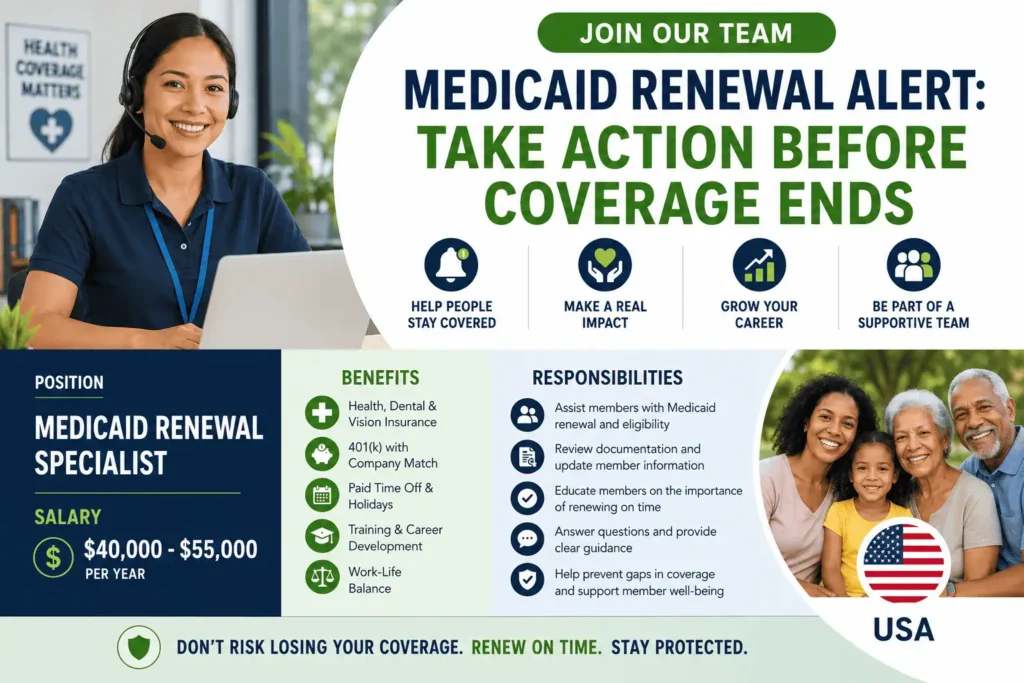
Millions of Americans rely on Medicaid for access to essential healthcare services, including doctor visits, hospital care, prescription medications, preventive screenings, maternity care, mental health services, and long-term care. For many low-income individuals, children, seniors, and people with disabilities, Medicaid provides critical health coverage that helps protect both their health and financial well-being.
However, having Medicaid coverage is not a one-time approval. Beneficiaries are generally required to renew their coverage periodically to confirm they still meet the program’s eligibility requirements. Missing a renewal notice, failing to submit requested documents, or not responding before the deadline could result in the loss of health insurance—even if the individual still qualifies for Medicaid.
Over the past few years, states have resumed regular Medicaid eligibility reviews after temporary pandemic-related protections ended. As a result, millions of Americans have been asked to renew their coverage, and many have lost benefits simply because paperwork was incomplete or deadlines were missed rather than because they no longer qualified. (medicaid.gov)
If you or someone in your household receives Medicaid benefits, now is an excellent time to check your renewal status and make sure your coverage remains active.
What Is Medicaid?
Medicaid is a joint federal and state health insurance program that provides medical coverage for eligible individuals with limited income and resources.
Although the federal government establishes broad guidelines, each state administers its own Medicaid program, meaning eligibility rules, covered services, and renewal procedures may differ depending on where you live.
Medicaid commonly serves:
- Low-income adults.
- Children.
- Pregnant individuals.
- Seniors.
- People with disabilities.
- Certain families with limited financial resources.
Coverage may include a wide variety of healthcare services depending on the state’s program.
Why Is Medicaid Renewal Important?
Receiving Medicaid benefits does not guarantee permanent enrollment.
States periodically review each beneficiary’s eligibility to determine whether they continue to qualify based on current information.
Renewal helps verify factors such as:
- Household income.
- Family size.
- State residency.
- Citizenship or eligible immigration status.
- Other program requirements.
If beneficiaries do not complete the renewal process on time, coverage may end—even if they would otherwise remain eligible. (medicaid.gov)
Why Are So Many People Receiving Renewal Notices?
During the COVID-19 public health emergency, many Medicaid beneficiaries remained continuously enrolled without the usual eligibility reviews.
Since those temporary protections have ended, states have resumed regular renewals, often called the Medicaid unwinding process.
As part of this process, states are reviewing millions of Medicaid cases to determine continued eligibility. (medicaid.gov)
Because of these nationwide reviews, many households are now receiving renewal packets or requests for updated information.
What Happens During a Medicaid Renewal?
The renewal process allows the state Medicaid agency to verify whether you continue to meet program requirements.
Depending on your state, you may receive:
- A renewal packet by mail.
- An online renewal request.
- A request for additional documents.
- A phone interview.
- A notice confirming automatic renewal if enough information is already available.
Some states can renew coverage automatically using information from other government databases, while others require beneficiaries to submit updated information themselves.
What Information May Be Requested?
During renewal, your state Medicaid agency may ask for updated information regarding:
- Household income.
- Employment status.
- Household size.
- Current address.
- Contact information.
- Citizenship or immigration documents if applicable.
- Other eligibility information.
Providing complete and accurate information can help prevent delays in processing.
Common Documents You May Need
Although requirements vary by state, beneficiaries may be asked to provide documents such as:
- Recent pay stubs.
- Tax records.
- Social Security numbers.
- Identification documents.
- Proof of residency.
- Employer information.
- Benefit award letters.
- Immigration documents if applicable.
Keeping these records organized can make the renewal process much easier.
What Happens If You Miss the Deadline?
Missing your Medicaid renewal deadline can have serious consequences.
Depending on state procedures, you could:
- Lose Medicaid coverage.
- Experience a gap in health insurance.
- Need to reapply for benefits.
- Delay access to medical care.
- Face interruptions in prescription coverage.
Many people lose Medicaid not because they are ineligible but because required paperwork is never submitted or is incomplete. (medicaid.gov)
Can You Lose Medicaid Even If You Still Qualify?
Yes.
Administrative issues are one of the most common reasons people lose Medicaid coverage.
Examples include:
- Returning paperwork late.
- Moving without updating your address.
- Missing renewal notices.
- Forgetting to sign required forms.
- Failing to submit requested documentation.
Even eligible beneficiaries should respond promptly to all communications from their state Medicaid agency.
What If Your Income Has Changed?
Changes in income may affect Medicaid eligibility, but they do not automatically mean you will lose coverage.
Depending on your state’s rules, you may:
- Continue qualifying for Medicaid.
- Qualify under a different Medicaid eligibility category.
- Become eligible for another health insurance program.
- Qualify for financial assistance through the Health Insurance Marketplace.
Reporting income changes accurately helps ensure the correct eligibility determination.
How Can You Check Your Renewal Status?
Most states offer several ways to check the status of your Medicaid renewal.
These may include:
- Online Medicaid portals.
- State benefit websites.
- Customer service phone numbers.
- Local Medicaid offices.
- Notices sent by mail.
Checking your status regularly can help you respond quickly if additional information is needed.
What Should You Do If You Receive a Renewal Notice?
If your state sends you a Medicaid renewal notice, do not ignore it.
Take the following steps:
- Read the notice carefully.
- Check the response deadline.
- Gather any requested documents.
- Complete all required forms.
- Submit everything before the deadline.
- Keep copies of your paperwork.
- Monitor your application status.
Submitting information early may help avoid processing delays.
Can Coverage Be Renewed Automatically?
In many cases, yes.
Some states use available government records to verify eligibility automatically.
If sufficient information is available, your state may renew your coverage without requiring additional paperwork.
Even if automatic renewal occurs, it is important to carefully review any notices you receive to confirm that your information is accurate.
What If Your Medicaid Coverage Ends?
If your Medicaid coverage ends, you may still have options.
Depending on your situation, you may:
- Appeal the decision if you believe it was incorrect.
- Reapply for Medicaid if circumstances change.
- Qualify for the Children’s Health Insurance Program (CHIP).
- Enroll in Marketplace health insurance if eligible.
- Receive premium assistance through Marketplace tax credits.
Losing Medicaid does not always mean you will be without health insurance, but acting quickly is important.
Tips to Avoid Losing Coverage
You can reduce the risk of losing Medicaid benefits by following a few simple steps:
- Update your mailing address immediately after moving.
- Report income or household changes promptly.
- Open and read all mail from your Medicaid agency.
- Respond to renewal requests as soon as possible.
- Keep copies of submitted documents.
- Verify that your contact information is current.
These steps can help prevent avoidable interruptions in coverage.
Frequently Asked Questions
How often do I have to renew Medicaid?
Renewal schedules vary by state, but many beneficiaries are required to complete an eligibility review approximately once each year.
Will I automatically lose coverage after the renewal notice?
No. Receiving a renewal notice simply means your state is reviewing your eligibility. Coverage generally continues if you remain eligible and complete the renewal process successfully.
Can I renew my Medicaid online?
Many states allow online renewals through their Medicaid or benefits portal, although available options vary.
What if I never received my renewal notice?
If you recently moved or believe you missed a notice, contact your state Medicaid agency as soon as possible to verify your renewal status.
Can I appeal if my Medicaid benefits are terminated?
Yes. Beneficiaries generally have appeal rights if they disagree with a Medicaid eligibility decision. The appeal instructions are typically included in the notice sent by the state.
Common Mistakes That Delay Renewals
Many delays occur because beneficiaries:
- Forget to update their address.
- Submit incomplete forms.
- Miss deadlines.
- Fail to provide requested documentation.
- Ignore follow-up notices.
- Do not keep copies of submitted paperwork.
Reviewing your application carefully before submission can help prevent these issues.
Why Medicaid Coverage Matters
Health insurance provides financial protection and access to essential healthcare services. Medicaid helps millions of Americans receive preventive care, manage chronic conditions, obtain prescription medications, and access emergency medical treatment.
Without continuous coverage, individuals may postpone necessary medical care, face higher healthcare costs, or experience interruptions in ongoing treatment.
Completing your Medicaid renewal on time helps ensure continued access to important healthcare services for you and your family.
Final Thoughts
Medicaid remains one of the nation’s most important healthcare programs, providing coverage for millions of eligible Americans. Because states are continuing regular eligibility reviews, beneficiaries should pay close attention to renewal notices and respond promptly to any requests for updated information.
If you currently receive Medicaid benefits, reviewing your renewal status today could help prevent an unexpected loss of coverage. Updating your contact information, gathering required documents, and submitting your renewal before the deadline can help ensure your healthcare benefits continue without interruption.
Taking a few minutes now to complete the renewal process may save you from costly gaps in health insurance and help protect your access to the medical care you and your family depend on.
Medicaid members should review their renewal status and update their information on time to help avoid losing health coverage or experiencing delays in benefits.
CHECK HERE FOR MEDICAID RENEWAL INFORMATION IN THE UNITED STATES
- Medicaid Program Information 🇺🇸
- Check Medicaid Eligibility 🇺🇸
- Apply or Renew Medicaid Benefits 🇺🇸
- Find Health Assistance Programs 🇺🇸