
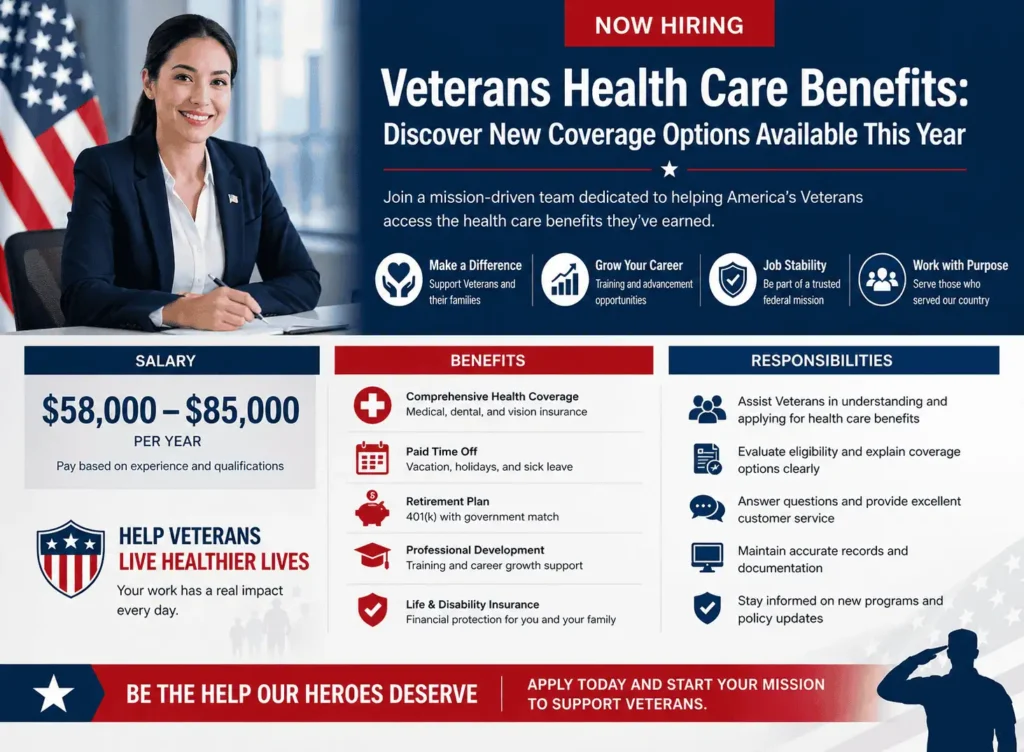
For millions of American veterans, access to quality healthcare is one of the most valuable benefits earned through military service. From routine checkups and preventive care to specialized treatment for service-connected conditions, mental health support, prescription medications, and long-term care, the U.S. Department of Veterans Affairs (VA) offers a wide range of healthcare services designed to meet the unique needs of veterans.
In recent years, the Department of Veterans Affairs has expanded eligibility for VA health care, allowing more former service members to qualify for medical benefits than ever before. Thanks to changes in eligibility rules and continued implementation of legislation related to toxic exposure, many veterans who previously believed they were ineligible may now qualify for VA health care coverage. Veterans who served during the Vietnam War, Gulf War, Iraq, Afghanistan, or other qualifying combat operations may have expanded access to services, even if they have never enrolled before.
Despite these expanded opportunities, many eligible veterans remain unaware of the healthcare benefits available to them. Some assume they earn too much to qualify, while others believe private insurance prevents them from enrolling. In reality, VA health care can often be used alongside other health insurance, providing additional access to affordable medical services.
If you served in the U.S. military and have not reviewed your VA healthcare eligibility recently, now may be an excellent time to explore the latest coverage options.
What Is VA Health Care?
VA health care is a comprehensive healthcare system operated by the U.S. Department of Veterans Affairs.
Unlike private health insurance, VA health care provides eligible veterans with direct access to medical services through VA medical centers, outpatient clinics, community-based providers, and authorized community care networks.
Depending on eligibility, veterans may receive care for:
- Preventive services.
- Routine medical exams.
- Specialty care.
- Emergency care.
- Mental health treatment.
- Prescription medications.
- Rehabilitation services.
- Long-term care.
- Women’s health services.
- Home health care.
The specific services available depend on each veteran’s eligibility and assigned priority group.
Who May Qualify?
Many veterans are surprised to learn they may qualify for VA health care.
In general, eligibility is based on factors such as:
- Military service history.
- Character of discharge.
- Length of active-duty service.
- Service-connected disabilities.
- Exposure to environmental hazards.
- Income in certain situations.
Most veterans who served on active duty and did not receive a dishonorable discharge may be eligible to apply for VA health care. Recent eligibility expansions also include many veterans exposed to toxic substances or hazardous environments during military service.
Expanded Eligibility for More Veterans
Recent changes have expanded access to VA healthcare for millions of veterans.
Veterans who served in any of the following may now qualify if they meet basic service and discharge requirements:
- Vietnam War.
- Gulf War.
- Iraq.
- Afghanistan.
- Post-9/11 combat operations.
- Other qualifying deployments involving toxic or hazardous exposure.
These updates were designed to ensure that more veterans receive access to healthcare related to military service and environmental exposures.
What Healthcare Services Are Covered?
VA health care offers a broad range of medical services.
Coverage may include:
- Primary care.
- Specialist visits.
- Preventive screenings.
- Laboratory testing.
- Hospital care.
- Surgery.
- Mental health counseling.
- PTSD treatment.
- Substance use treatment.
- Women’s healthcare.
- Vision care.
- Hearing services.
- Prescription medications.
- Prosthetics and medical equipment.
- Physical therapy.
- Home health services.
- Geriatric care.
The exact services available depend on each veteran’s medical needs and eligibility.
Mental Health Services
Mental health remains a major focus of VA healthcare.
Eligible veterans may receive care for:
- Depression.
- Anxiety.
- Post-traumatic stress disorder (PTSD).
- Substance use disorders.
- Military sexual trauma (MST).
- Suicide prevention services.
- Counseling.
- Individual therapy.
- Group therapy.
In some cases, certain mental health services may be available even if a veteran is not enrolled in the full VA healthcare system.
Care Outside VA Facilities
Many veterans assume they must receive all medical treatment at a VA hospital.
However, eligible veterans may receive care from non-VA providers through the VA Community Care program when:
- VA services are not available nearby.
- Wait times exceed program standards.
- Specialized care is unavailable at a local VA facility.
- Other eligibility requirements are met.
This option helps improve access to healthcare for veterans living in rural or underserved communities.
Can You Have VA Health Care and Private Insurance?
Yes.
Many veterans have both VA healthcare and private insurance.
Having employer-sponsored insurance, Medicare, Medicaid, or other health coverage generally does not prevent someone from enrolling in VA healthcare if they are otherwise eligible.
In some situations, the VA may bill a veteran’s private health insurance for treatment of non-service-connected conditions, but veterans generally are not responsible for any unpaid balance billed to their insurer beyond applicable VA copayments.
How Priority Groups Work
When veterans enroll in VA healthcare, they are assigned to one of several priority groups.
Priority groups help determine:
- Enrollment priority.
- Copayment responsibilities.
- Access to certain benefits.
- Cost-sharing requirements.
Assignment depends on factors including:
- Service-connected disability ratings.
- Income.
- Military service history.
- Special eligibility categories.
Some veterans receive healthcare at no cost, while others may have modest copayments depending on their priority group.
Prescription Drug Coverage
Eligible veterans may receive prescription medications through VA pharmacies.
Benefits may include:
- Prescription drug coverage.
- Medication refills.
- Mail-order pharmacy services.
- Online prescription management.
Prescription costs depend on the veteran’s eligibility and priority group.
Vision and Hearing Benefits
VA healthcare may also include vision and hearing services.
Depending on eligibility, veterans may receive:
- Eye examinations.
- Preventive vision screenings.
- Eyeglasses.
- Hearing evaluations.
- Hearing aids.
- Low vision rehabilitation services.
Coverage varies according to individual eligibility requirements.
Dental Care
Dental benefits are available for certain eligible veterans.
Eligibility depends on factors such as:
- Service-connected dental conditions.
- Disability status.
- Former prisoner-of-war status.
- Other qualifying circumstances.
Not every enrolled veteran automatically qualifies for VA dental care, so reviewing individual eligibility is important.
What Documents May Be Needed?
When applying for VA healthcare, veterans may need:
- DD Form 214 or other separation documents.
- Government-issued identification.
- Social Security number.
- Financial information if requested.
- Insurance information.
- Medical documentation in certain situations.
Having these records available can help simplify the enrollment process.
How Do You Apply?
Veterans can apply for VA healthcare in several ways.
Applications may be submitted:
- Online.
- By phone.
- By mail.
- In person at a VA medical center or clinic.
After the application is reviewed, eligible veterans receive notification regarding enrollment and their assigned priority group.
Common Reasons Veterans Miss Out
Many eligible veterans never enroll because they:
- Believe they earn too much.
- Assume private insurance makes them ineligible.
- Think they must have a service-connected disability.
- Are unaware of recent eligibility expansions.
- Have never reviewed updated VA requirements.
Recent changes have made many more veterans eligible than in previous years.
Frequently Asked Questions
Can I qualify if I have private insurance?
Yes. Many veterans use VA healthcare together with private insurance.
Do I need a service-connected disability?
Not necessarily. Many veterans qualify based on their military service and discharge status even without a service-connected disability.
Can combat veterans receive additional benefits?
Many combat veterans have expanded eligibility, particularly those who served in qualifying combat zones or experienced toxic exposures.
Does VA healthcare include mental health treatment?
Yes. VA healthcare offers extensive mental health services, including PTSD treatment, counseling, and substance use care.
Can I receive care outside a VA hospital?
Yes. Eligible veterans may qualify for care through authorized community providers when certain conditions are met.
Tips to Make the Most of Your Benefits
Veterans can maximize their healthcare benefits by:
- Reviewing current eligibility requirements.
- Applying even if they were denied in the past.
- Keeping military records organized.
- Updating personal information with the VA.
- Learning about Community Care options.
- Scheduling regular preventive care visits.
- Reviewing available specialty programs.
Taking time to understand your available benefits may improve access to healthcare and reduce out-of-pocket medical expenses.
Why VA Health Care Matters
Quality healthcare is essential for maintaining long-term physical and mental well-being. VA health care provides millions of veterans with access to comprehensive medical services tailored to the unique health challenges associated with military service.
Whether a veteran needs routine preventive care, specialized treatment, prescription medications, rehabilitation services, or support for service-related conditions, the VA healthcare system offers a wide range of resources designed to improve health outcomes and quality of life.
Recent eligibility expansions mean that many veterans who once believed they were not eligible may now qualify for valuable healthcare benefits.
Final Thoughts
VA health care continues to evolve, providing expanded access and comprehensive medical services for eligible veterans across the United States. Recent eligibility updates have opened the door for millions of former service members—particularly those exposed to toxins or hazardous environments during their military service—to receive the healthcare they have earned.
If you served in the U.S. military and have not recently reviewed your eligibility, now is a great time to explore your options. Even if you have private health insurance or were previously unsure whether you qualified, you may now be eligible for a broad range of healthcare services through the Department of Veterans Affairs.
Taking a few minutes to review the current requirements and submit an application could help you gain access to preventive care, specialized treatment, mental health services, prescription medications, and other valuable healthcare benefits that support your long-term health and well-being.
Veterans may have access to expanded health care benefits through the Department of Veterans Affairs, including medical services, preventive care and specialized support based on eligibility.
CHECK HERE FOR VETERANS HEALTH CARE BENEFITS IN THE UNITED STATES
- VA Health Care Benefits 🇺🇸
- Check VA Health Care Eligibility 🇺🇸
- Department of Veterans Affairs 🇺🇸
- Find Veterans Benefits 🇺🇸