
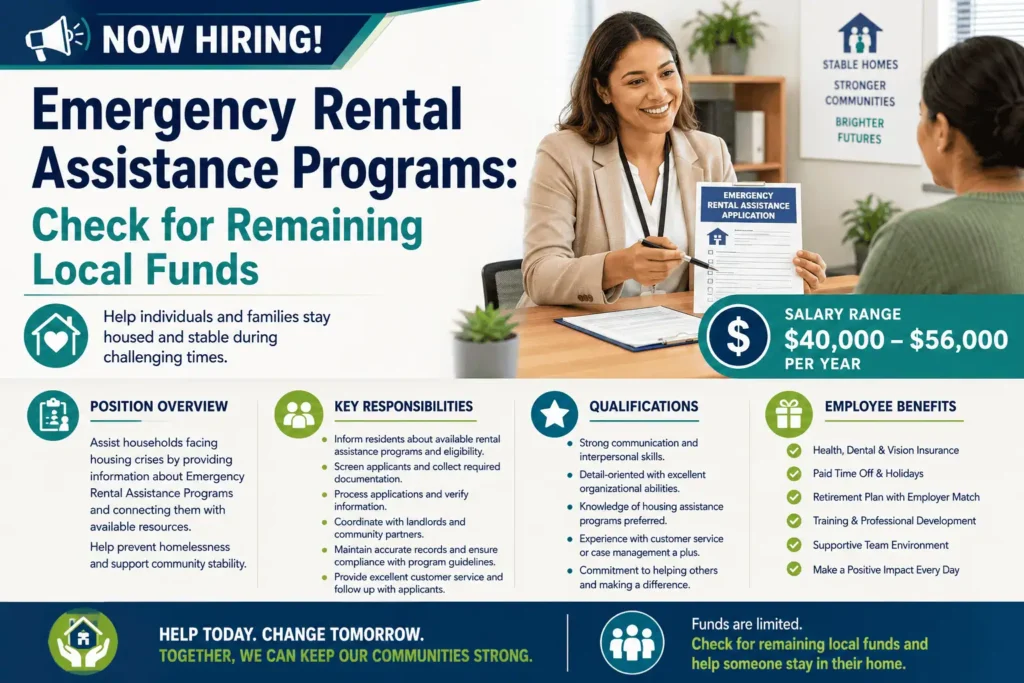
Paying rent has become one of the biggest financial challenges for millions of households across the United States. Rising housing costs, unexpected job losses, medical emergencies, and inflation have made it difficult for many renters to stay current on their monthly payments. While the nationwide Emergency Rental Assistance (ERA) program created during the COVID-19 pandemic has officially concluded at the federal level, many communities continue to offer rental assistance through remaining local funds, state programs, city initiatives, nonprofit organizations, and other housing assistance resources.
For families struggling to avoid eviction or catch up on overdue rent, these local programs may provide valuable financial support. However, because funding is often limited and administered locally, available assistance can change quickly. Some communities still have active programs, while others have transitioned to new housing stabilization initiatives or emergency grants.
If you’re having trouble paying rent, now is a good time to explore what assistance may still be available where you live. Here’s what you should know about emergency rental assistance and how to find remaining local resources.
What Were Emergency Rental Assistance Programs?
Emergency Rental Assistance (ERA) programs were established by the U.S. Department of the Treasury to help households affected by financial hardship pay:
- Monthly rent.
- Past-due rent.
- Utility bills.
- Past-due utility balances.
- Certain housing-related expenses.
Rather than accepting applications directly, the federal government distributed funding to states, local governments, Tribal organizations, and U.S. territories, which then operated their own assistance programs. Although the federal ERA funding period has ended, many communities continue offering other forms of rental assistance using local resources or remaining housing initiatives.
Are Rental Assistance Programs Still Available?
Yes—in many areas.
Although the original nationwide ERA program is no longer accepting new applications, some cities, counties, housing agencies, charities, and nonprofit organizations continue to provide rental assistance using local funding sources or replacement programs.
Availability depends entirely on where you live.
Some communities currently offer:
- Emergency rent grants.
- Eviction prevention assistance.
- Short-term rental subsidies.
- Utility payment assistance.
- Housing stabilization programs.
- Local emergency housing funds.
Because these programs are administered locally, eligibility rules, funding amounts, and application periods vary significantly.
Who May Qualify?
Each program establishes its own eligibility requirements.
Many local rental assistance programs consider:
- Household income.
- Financial hardship.
- Risk of eviction.
- Past-due rent.
- Household size.
- Residency within the service area.
Priority may be given to:
- Families with children.
- Older adults.
- Veterans.
- Individuals with disabilities.
- Survivors of domestic violence.
- Households experiencing homelessness or at immediate risk of losing housing.
Eligibility is determined by the agency operating the program.
Why It’s Important to Check Now
Local rental assistance funds often operate on limited budgets.
Unlike permanent federal benefit programs, many housing assistance initiatives continue only while funding remains available.
Some agencies close applications once all available funds have been awarded.
Others reopen when new grants or local appropriations become available.
Checking early may improve your chances of receiving assistance before enrollment closes.
What Expenses May Be Covered?
Depending on the program, assistance may help cover:
- Current month’s rent.
- Overdue rent.
- Late fees in eligible situations.
- Security deposits.
- Utility bills.
- Water service.
- Electricity.
- Natural gas.
- Housing-related emergency expenses.
Not every program covers every type of expense.
Applicants should review the rules for the specific program serving their community.
Can Working Families Apply?
Yes.
Many rental assistance programs are designed for households that are employed but experiencing financial hardship.
Applicants may qualify because of:
- Reduced work hours.
- Unexpected medical expenses.
- Temporary unemployment.
- Increased housing costs.
- Family emergencies.
- Loss of household income.
Employment alone does not determine eligibility.
Can Landlords Participate?
Many local programs allow landlords to work directly with tenants during the application process.
Depending on program rules, landlords may be asked to:
- Confirm the amount of rent owed.
- Provide lease information.
- Verify tenant occupancy.
- Complete required documentation.
Some programs issue payments directly to landlords, while others reimburse tenants after approval.
How Do You Apply?
Because there is no single nationwide application, households should contact the agency responsible for housing assistance in their community.
Applications may be submitted through:
- Local housing authorities.
- County governments.
- City housing departments.
- Community action agencies.
- Nonprofit organizations.
- Charitable housing programs.
Many agencies allow online applications, while others accept applications by appointment or in person.
Documents You May Need
Although requirements vary, applicants are commonly asked to provide:
- Government-issued identification.
- Lease agreement.
- Proof of address.
- Recent rent statements.
- Eviction notice, if applicable.
- Utility bills.
- Proof of household income.
- Pay stubs.
- Benefit award letters.
- Bank statements.
Having these documents ready may help speed up the review process.
What Happens After You Apply?
Application procedures differ by agency.
Generally, the process includes:
- Reviewing eligibility.
- Verifying income.
- Confirming rental obligations.
- Contacting the landlord if required.
- Determining available funding.
- Issuing an approval or denial.
Some emergency situations may receive expedited review, particularly when households face immediate eviction or utility disconnection.
Common Reasons Applications Are Delayed
Processing delays often occur because of:
- Missing documentation.
- Incomplete applications.
- Incorrect income information.
- Difficulty contacting landlords.
- High application volume.
- Limited staff resources.
Responding quickly to requests for additional information can help avoid unnecessary delays.
Other Housing Resources to Consider
Even if emergency rental assistance is unavailable in your area, other programs may still provide support.
Households may wish to explore:
- Housing Choice Voucher waiting lists.
- Public housing opportunities.
- State rental assistance programs.
- Local homelessness prevention initiatives.
- Community action agencies.
- Faith-based charities.
- Nonprofit housing organizations.
- Utility assistance programs such as LIHEAP.
Many organizations work together to help households remain safely housed.
Frequently Asked Questions
Is the federal Emergency Rental Assistance Program still accepting applications?
The nationwide federal ERA program has ended. However, many communities continue to operate local rental assistance or housing stabilization programs using other funding sources.
Can I still receive help with overdue rent?
Possibly. Some local governments and nonprofit organizations continue to offer assistance for eligible households with unpaid rent, depending on available funding.
Can working households qualify?
Yes. Many local programs serve working families experiencing temporary financial hardship.
Is assistance available in every community?
No. Availability depends on local funding and program administration. Some communities currently have active assistance programs, while others may not.
Should I wait until I receive an eviction notice?
No. Applying as soon as you experience financial difficulty may improve your chances of receiving assistance before available funds are exhausted.
Tips for Finding Assistance
If you’re looking for rental assistance, consider these steps:
- Contact your city or county housing department.
- Check with your local Public Housing Agency.
- Reach out to your Community Action Agency.
- Ask nonprofit housing organizations about emergency grants.
- Call your local 2-1-1 information service for referrals.
- Apply promptly whenever applications are open.
Taking action early often provides more options than waiting until a housing emergency becomes critical.
Why Local Programs Continue to Matter
Although the original federal Emergency Rental Assistance program has ended, housing affordability remains a major concern across the country. In response, many states and local governments have redirected resources toward eviction prevention, housing stabilization, and emergency grants. In some cases, remaining housing-related funds have also been repurposed to support affordable housing initiatives and other local needs.
Because these programs differ from one community to another, staying informed about local announcements can help renters identify new opportunities as funding becomes available.
Final Thoughts
Emergency rental assistance continues to play an important role in helping households avoid eviction and maintain stable housing, even though the original nationwide ERA program has concluded. Across the United States, many local governments, nonprofit organizations, and housing agencies still provide assistance through emergency grants, housing stabilization initiatives, and other community-based resources.
If you’re struggling to pay rent, don’t assume that all assistance has disappeared. Check with your local housing authority, city or county government, Community Action Agency, or nonprofit organizations to learn what programs are currently available in your area. Acting quickly, gathering the required documents, and applying while funding remains available could make a meaningful difference in helping your household stay safely housed during a difficult financial period.
Emergency Rental Assistance funds may still be available in some areas , providing support to renters struggling with unpaid rent or utility bills due to financial hardship.
CHECK HERE FOR EMERGENCY RENTAL ASSISTANCE IN THE UNITED STATES
- Find Rental Assistance Programs 🇺🇸
- HUD Rental Assistance Resources 🇺🇸
- Apply for Housing Help 🇺🇸
- Check Eligibility for Rental Assistance 🇺🇸