
For many households across the United States, keeping a home comfortable throughout the year can be expensive. Heating costs during cold months, air conditioning expenses during summer, and rising energy prices can place significant pressure on family budgets. While many people focus on lowering monthly utility bills through simple changes like turning off lights or adjusting thermostats, some homes require larger improvements to become more energy efficient.
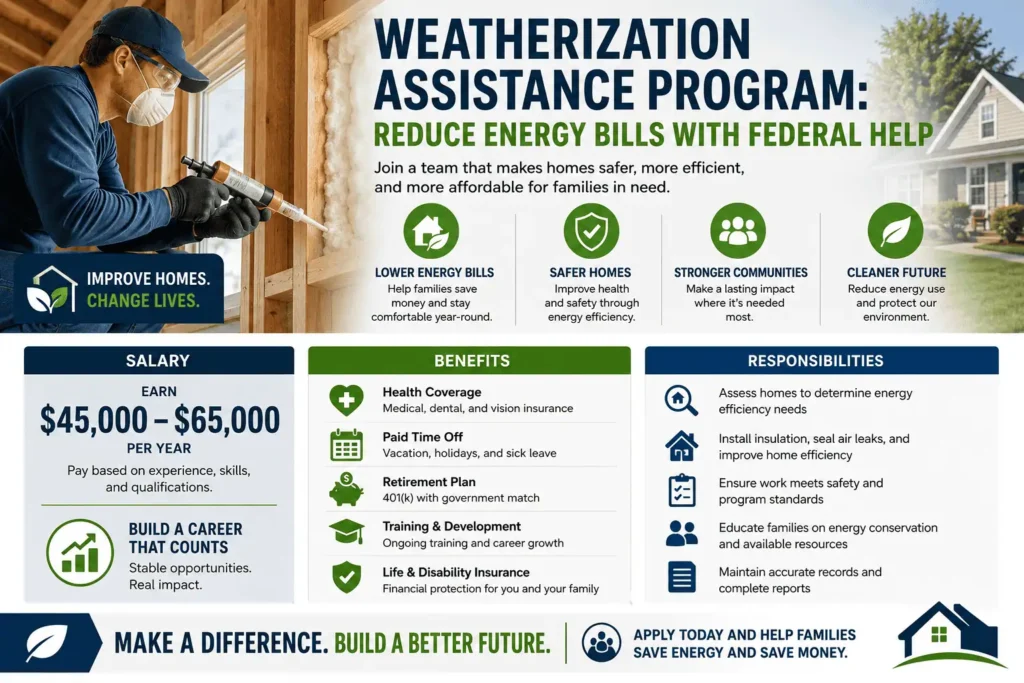
The Weatherization Assistance Program (WAP) helps eligible low-income households reduce energy costs by making energy-saving improvements to their homes. Through this federally funded program, approved local agencies provide services designed to improve energy efficiency, increase household comfort, and reduce the amount of energy needed for heating and cooling.
For families struggling with high utility expenses, seniors living on fixed incomes, and households with vulnerable members, weatherization assistance could provide valuable support. By improving a home’s energy efficiency, eligible participants may save money on future energy bills while creating a safer and more comfortable living environment.
If you are wondering whether your household may qualify for free energy-saving improvements, here’s what you need to know about the Weatherization Assistance Program and how to apply.
What Is the Weatherization Assistance Program?
The Weatherization Assistance Program (WAP) is a federal program administered by the U.S. Department of Energy (DOE). It provides funding to states, territories, and Tribal organizations, which then work with local agencies to deliver energy-efficiency improvements to eligible households.
Unlike programs that provide direct cash payments, WAP offers services that improve the condition of a home and help reduce long-term energy expenses.
The goal of the program is to make homes more energy efficient while helping families spend less on heating and cooling costs.
Weatherization services may include:
- Improving insulation.
- Sealing air leaks.
- Repairing or replacing inefficient heating systems.
- Improving ventilation.
- Installing energy-saving equipment.
- Making health and safety improvements related to energy use.
The exact services provided depend on the condition of the home and the results of an energy assessment.
How Can Weatherization Help Reduce Energy Bills?
Many homes lose energy because of issues such as poor insulation, air leaks, outdated heating systems, or inefficient appliances.
When a home is properly weatherized, it can:
- Stay warmer during winter.
- Stay cooler during summer.
- Require less energy for heating and cooling.
- Reduce monthly utility expenses.
- Improve indoor comfort.
- Create a healthier living environment.
Instead of providing temporary bill assistance, weatherization focuses on long-term savings by addressing the reasons energy costs may be unnecessarily high.
For families who consistently struggle with expensive utility bills, improving home efficiency can make a lasting difference.
Who May Qualify?
Eligibility requirements vary by state and local agency, but the Weatherization Assistance Program generally serves low-income households.
Applicants are commonly evaluated based on:
- Household income.
- Household size.
- Location.
- Participation in certain assistance programs.
- Priority needs within the household.
Priority is often given to households with:
- Older adults.
- Individuals with disabilities.
- Families with children.
- High energy costs.
- Residents experiencing energy-related health or safety risks.
Because each state manages its own program, eligibility rules and application procedures may differ.
Income Requirements
Income eligibility is one of the main factors used to determine qualification.
Households generally must meet income limits established by federal guidelines and state program rules.
Income limits may depend on:
- Number of people living in the household.
- Total household income.
- State-specific requirements.
Larger households typically have higher income limits than smaller households.
Since income guidelines can change, families who were previously unable to qualify may want to check updated requirements.
Can Renters Apply?
Yes.
Renters may qualify for weatherization assistance if they meet program requirements.
However, because improvements are made to the property itself, renters usually need permission from their landlord before certain work can be completed.
Weatherization agencies often work with both tenants and property owners to ensure improvements benefit eligible residents.
Renters should contact their local weatherization provider to learn about specific requirements.
Can Homeowners Apply?
Yes.
Homeowners who meet income and eligibility requirements can apply for WAP assistance.
Many homeowners benefit from improvements that may otherwise be expensive, such as:
- Insulation upgrades.
- Heating system improvements.
- Air sealing.
- Energy-efficiency repairs.
The program helps make homes more affordable to maintain while improving overall energy performance.
What Services Are Provided?
Weatherization services vary depending on the home’s needs.
Before improvements begin, trained professionals typically conduct an energy assessment to identify areas where the home is losing energy.
Possible improvements may include:
Insulation Improvements
Adding insulation in areas such as:
- Attics.
- Walls.
- Floors.
- Crawl spaces.
Proper insulation helps maintain indoor temperatures and reduces the workload on heating and cooling systems.
Air Sealing
Small gaps and cracks can allow heated or cooled air to escape.
Weatherization professionals may seal areas around:
- Doors.
- Windows.
- Pipes.
- Electrical openings.
- Other areas where air leaks occur.
Reducing air leaks can improve comfort and energy efficiency.
Heating and Cooling Improvements
Some homes may receive repairs or upgrades related to:
- Furnaces.
- Heating systems.
- Ventilation.
- Cooling equipment.
These improvements can help systems operate more efficiently and safely.
Health and Safety Improvements
Before energy upgrades are completed, agencies may identify safety concerns related to:
- Carbon monoxide risks.
- Poor ventilation.
- Unsafe heating equipment.
- Electrical problems.
Addressing these concerns helps protect residents while improving energy performance.
Does Weatherization Provide Cash Payments?
No.
The Weatherization Assistance Program does not provide direct cash payments or monthly checks.
Instead, approved households receive energy-efficiency improvements performed by qualified professionals.
The value of assistance depends on the work needed and available program resources.
How Much Can Families Save?
Energy savings vary depending on the home’s condition, climate, energy usage, and improvements completed.
Households with significant energy-efficiency problems may experience noticeable reductions in heating and cooling costs after receiving weatherization services.
Savings may come from:
- Lower energy consumption.
- Reduced heating and cooling demand.
- Improved equipment efficiency.
- Better insulation.
The program is designed to create long-term benefits rather than a one-time reduction in expenses.
How Do You Apply?
Applications are handled locally through agencies approved by each state.
To apply, households typically need to:
- Find the weatherization provider serving their area.
- Complete an application.
- Provide household information.
- Submit required documentation.
- Wait for eligibility review.
- Schedule a home energy assessment if approved.
Some areas may have waiting lists due to high demand.
Documents You May Need
Applicants are often asked to provide:
- Proof of income.
- Identification documents.
- Proof of residence.
- Recent utility bills.
- Information about household members.
- Documentation of participation in assistance programs, if applicable.
Having these documents ready can help make the application process easier.
Can Households Receiving Other Benefits Apply?
Yes.
Many households receiving other assistance programs may also qualify for weatherization services.
Participation in programs such as:
- Supplemental Nutrition Assistance Program (SNAP).
- Supplemental Security Income (SSI).
- Temporary Assistance for Needy Families (TANF).
- LIHEAP.
may help determine eligibility, depending on state rules.
Receiving other benefits does not automatically guarantee approval, but it may be considered during the application process.
Why Seniors and Vulnerable Households May Benefit
Older adults and individuals with health conditions may be especially affected by extreme indoor temperatures.
Weatherization improvements can help create safer living conditions by:
- Maintaining more stable indoor temperatures.
- Reducing heating and cooling costs.
- Improving air quality.
- Addressing safety concerns.
For seniors living on fixed incomes, lower energy expenses can help free up money for other essential needs.
Frequently Asked Questions
Is Weatherization Assistance free?
Yes. Eligible households receive approved weatherization services at no cost.
Does everyone qualify?
No. Eligibility depends on income, household circumstances, location, and available program funding.
Can I apply if I already receive utility assistance?
Yes. Many households receiving programs such as LIHEAP may also qualify for weatherization services.
Do I have to own my home?
No. Renters may qualify if they meet requirements and receive necessary landlord approval.
How long does the process take?
Processing times vary depending on the local agency, demand, funding, and the amount of work needed.
Will my utility bill disappear?
No. Weatherization does not eliminate energy bills, but it may help reduce energy usage and improve efficiency.
Tips Before Applying
If you think your household may qualify, consider these steps:
- Contact your local weatherization agency.
- Gather income and household documents.
- Keep recent utility bills available.
- Ask about current waiting lists.
- Apply as soon as possible.
- Respond quickly to requests for additional information.
Because many communities receive more applications than available funding can immediately serve, applying early may be beneficial.
Why This Program Matters
Energy costs are a necessary expense for every household, but inefficient homes can make those costs much higher than they need to be. Families with limited incomes often face the greatest challenges because they may not have the resources needed to repair insulation problems, replace outdated equipment, or improve energy efficiency on their own.
The Weatherization Assistance Program helps address these challenges by providing long-term solutions instead of temporary relief. By improving homes, the program helps families reduce energy waste, lower expenses, and create safer living environments.
For many participants, weatherization represents more than just home improvements—it provides greater financial stability and peace of mind.
Final Thoughts
The Weatherization Assistance Program offers an opportunity for eligible households to reduce energy expenses through free energy-efficiency improvements supported by federal funding. Whether you are struggling with high utility bills, living in an older home, or trying to make your household budget stretch further, this program may provide valuable assistance.
If you believe your household may qualify, checking your state’s requirements and contacting a local weatherization provider could be an important first step. Since funding and availability vary by location, applying early and preparing your documents can help you take advantage of available resources before programs reach capacity.
A more energy-efficient home can mean lower bills, improved comfort, and a healthier living environment for you and your family throughout the year.
The Weatherization Assistance Program may help reduce your energy costs by providing home improvements that increase energy efficiency for eligible low-income households.
CHECK HERE FOR WEATHERIZATION ASSISTANCE IN THE UNITED STATES
- Weatherization Assistance Program Overview 🇺🇸
- Apply for Weatherization Assistance 🇺🇸
- Check Eligibility Requirements 🇺🇸
- Get Help With Energy Bills 🇺🇸