
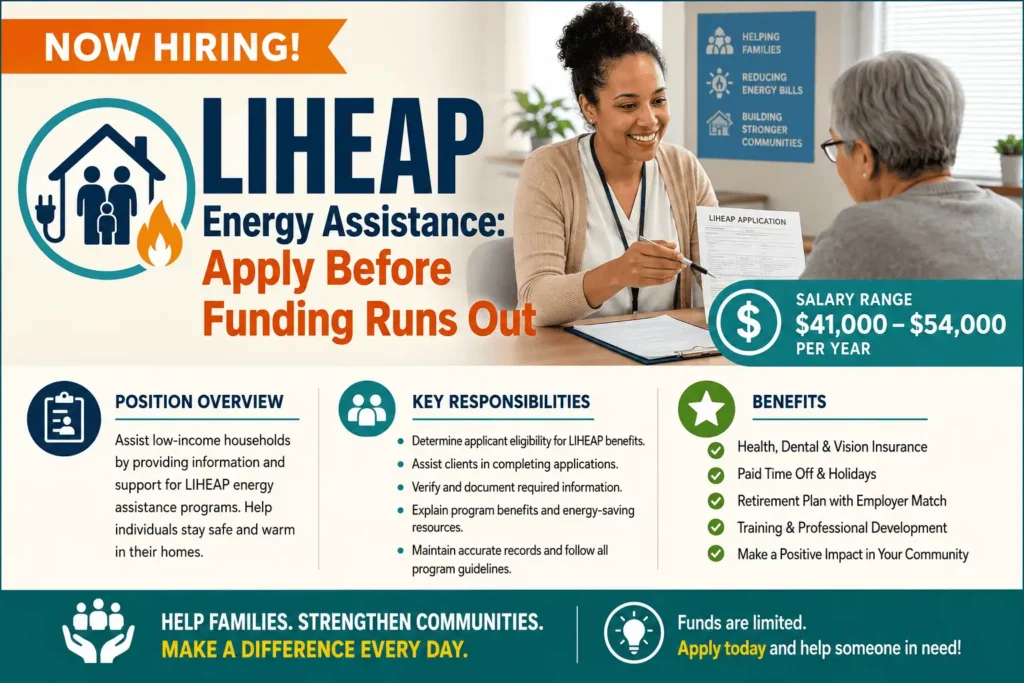
As energy costs continue to fluctuate across the United States, many households are finding it increasingly difficult to keep up with heating and cooling bills. Whether it’s paying for electricity during a summer heat wave or covering home heating expenses in the winter, utility costs can quickly consume a large portion of a family’s monthly budget.
Fortunately, the Low Income Home Energy Assistance Program (LIHEAP) helps millions of eligible Americans pay their energy bills and reduce the risk of utility shutoffs. Every year, federal funding is distributed to states, territories, and Tribal organizations, which then administer the program locally. Because funding is limited, applications are often accepted only while money remains available, making it important to apply as early as possible.
If you’re struggling with rising utility costs or wondering whether your household may qualify for assistance, here’s everything you need to know about LIHEAP and why applying early could make a significant difference.
What Is LIHEAP?
The Low Income Home Energy Assistance Program (LIHEAP) is a federally funded assistance program that helps eligible low-income households pay home energy costs.
The program is administered by the U.S. Department of Health and Human Services (HHS), while each state, territory, and Tribal organization manages its own application process, benefit amounts, and eligibility rules.
LIHEAP may help households with expenses such as:
- Home heating bills.
- Air conditioning costs.
- Electricity.
- Natural gas.
- Propane.
- Heating oil.
- Wood or pellets used for heating in eligible situations.
- Energy-related emergencies.
The program is designed to help vulnerable households maintain safe and healthy living conditions throughout the year.
Why Applying Early Matters
Unlike entitlement programs that provide benefits to every eligible applicant, LIHEAP operates with a limited amount of funding each year.
Once a state’s allocated funds have been committed, applications may close or applicants may be placed on a waiting list until additional funding becomes available.
Because of this, many agencies encourage households to submit applications as soon as enrollment opens rather than waiting until utility bills become overwhelming.
Applying early can improve your chances of receiving assistance before available funds are exhausted.
Who May Qualify?
Eligibility is determined by the agency administering LIHEAP in your state.
Although requirements vary, many programs consider factors such as:
- Household income.
- Household size.
- Energy costs.
- Type of fuel used.
- Vulnerability of household members.
Priority is often given to households that include:
- Older adults.
- Young children.
- Individuals with disabilities.
- Households facing high energy burdens.
Each state establishes specific eligibility guidelines within federal requirements.
Income Guidelines
Household income is one of the primary eligibility factors.
States establish income limits based on federal guidance and may consider:
- Annual household income.
- Monthly household income.
- Household size.
- Federal poverty guidelines.
- State median income.
Because limits differ across states, households that are not eligible in one state may qualify in another.
Income guidelines are also updated periodically.
What Types of Assistance Can LIHEAP Provide?
LIHEAP offers several forms of assistance depending on household needs and state program rules.
These may include:
- One-time utility bill assistance.
- Seasonal heating assistance.
- Cooling assistance during periods of extreme heat.
- Emergency energy assistance.
- Assistance to prevent utility disconnection.
- Help restoring utility service after shutoff.
Not every state offers every type of assistance, but many provide multiple forms of support throughout the year.
Emergency Assistance
One of LIHEAP’s most valuable services is emergency assistance.
Households experiencing situations such as:
- Utility disconnection.
- Imminent shutoff notices.
- Empty heating fuel tanks.
- Dangerous indoor temperatures.
may qualify for expedited assistance depending on state procedures.
Emergency benefits are intended to protect households from health and safety risks associated with losing essential utility services.
Can Renters Apply?
Yes.
Many renters qualify for LIHEAP.
Eligibility depends on how utility expenses are handled.
Households may qualify if they:
- Pay utility bills directly.
- Pay heating or cooling costs separately from rent.
- Have energy expenses included in rent under certain circumstances.
Application requirements vary depending on state rules and individual living arrangements.
Can Homeowners Apply?
Absolutely.
Homeowners meeting income and program requirements may also qualify for LIHEAP assistance.
The program is available regardless of whether applicants rent or own their homes.
Does LIHEAP Pay the Entire Utility Bill?
Usually not.
In most cases, LIHEAP provides partial assistance that helps reduce energy costs.
The amount awarded depends on several factors, including:
- Household income.
- Household size.
- Local climate.
- Energy costs.
- Available program funding.
- State benefit formulas.
Recipients remain responsible for paying any remaining balance owed to their utility provider.
How Do You Apply?
Applications are submitted through the LIHEAP agency serving your local community.
Many states allow households to:
- Apply online.
- Apply by mail.
- Apply in person.
- Schedule appointments with local community action agencies.
Application periods vary by state, and some programs open seasonally for heating or cooling assistance.
Documents You May Need
Preparing your paperwork in advance can help speed up the application process.
Commonly requested documents include:
- Government-issued identification.
- Proof of address.
- Utility bills.
- Proof of household income.
- Social Security numbers when required.
- Recent pay stubs.
- Benefit award letters.
- Lease agreement if renting.
Additional documents may be requested depending on state procedures.
Can You Receive LIHEAP With Other Benefits?
Yes.
Many households receive LIHEAP while also participating in programs such as:
- Supplemental Nutrition Assistance Program (SNAP).
- Supplemental Security Income (SSI).
- Medicaid.
- Temporary Assistance for Needy Families (TANF).
- Housing assistance programs.
Receiving one public assistance benefit does not automatically disqualify someone from LIHEAP.
Each program has its own eligibility requirements.
Common Reasons Applications Are Delayed
Processing delays often occur because of:
- Missing documentation.
- Incomplete applications.
- Incorrect income information.
- Missing utility account details.
- Failure to respond to agency requests.
Submitting complete and accurate information helps reduce delays.
Energy-Saving Education
Many LIHEAP agencies also provide helpful information about reducing household energy costs.
Participants may receive guidance on:
- Lowering electricity usage.
- Improving home energy efficiency.
- Managing seasonal utility expenses.
- Understanding utility payment plans.
- Accessing weatherization programs.
These resources can help families lower future energy bills in addition to receiving financial assistance.
Frequently Asked Questions
Is LIHEAP available in every state?
Yes. Every state, the District of Columbia, U.S. territories, and many Tribal organizations administer LIHEAP, although eligibility rules and benefit amounts vary by location.
Can working families qualify?
Yes. Employment does not automatically disqualify applicants. Many working households with modest incomes qualify for assistance.
Do I need to repay LIHEAP benefits?
No. LIHEAP assistance is generally a grant and does not have to be repaid, provided eligibility requirements are met.
Can I receive LIHEAP every year?
Possibly. Eligible households may apply during each program year, subject to state rules and available funding.
What happens if funding runs out?
Once available funds are exhausted, some agencies stop accepting applications or create waiting lists until additional funding becomes available. This is why applying early is strongly recommended.
Tips Before Applying
If you think your household may qualify, consider taking these steps:
- Gather your most recent utility bills.
- Collect proof of income for all household members.
- Keep identification documents readily available.
- Apply as soon as your local enrollment period opens.
- Respond quickly if the agency requests additional information.
- Ask whether emergency assistance is available if you have received a utility shutoff notice.
Preparing in advance can improve the likelihood of a smooth application process.
Why LIHEAP Is More Important Than Ever
Energy costs remain one of the largest monthly expenses for many households. During periods of extreme weather, utility bills can rise significantly, creating financial hardship for families already balancing housing costs, food expenses, transportation, and healthcare.
LIHEAP provides an important safety net by helping eligible households maintain essential heating and cooling services. In addition to reducing financial stress, the program helps protect vulnerable individuals—including seniors, young children, and people with disabilities—from health risks associated with unsafe indoor temperatures.
Because funding is limited and administered locally, applying promptly gives households the best opportunity to receive assistance before enrollment closes.
Final Thoughts
The Low Income Home Energy Assistance Program continues to help millions of Americans manage the cost of heating and cooling their homes. Whether you rent or own your home, live on a fixed income, or are working but struggling to keep up with rising utility costs, LIHEAP may provide valuable financial assistance that helps reduce your monthly energy expenses.
If your household has never applied before—or if your financial situation has recently changed—now is an excellent time to review your state’s eligibility requirements. Since LIHEAP funding is limited and many local agencies close applications once available funds have been allocated, submitting your application early could improve your chances of receiving assistance before funding runs out. Taking a few minutes to gather your documents and begin the application process today may help protect your household from costly utility bills and provide greater financial peace of mind throughout the year.
LIHEAP funds are limited and may run out soon , so eligible households are encouraged to apply as early as possible to receive assistance with heating and cooling energy costs.
CHECK HERE FOR LIHEAP ENERGY ASSISTANCE IN THE UNITED STATES
- LIHEAP Program Overview 🇺🇸
- Find Local Energy Assistance Programs 🇺🇸
- Check Eligibility for LIHEAP 🇺🇸
- Get Help Paying Utility Bills 🇺🇸