
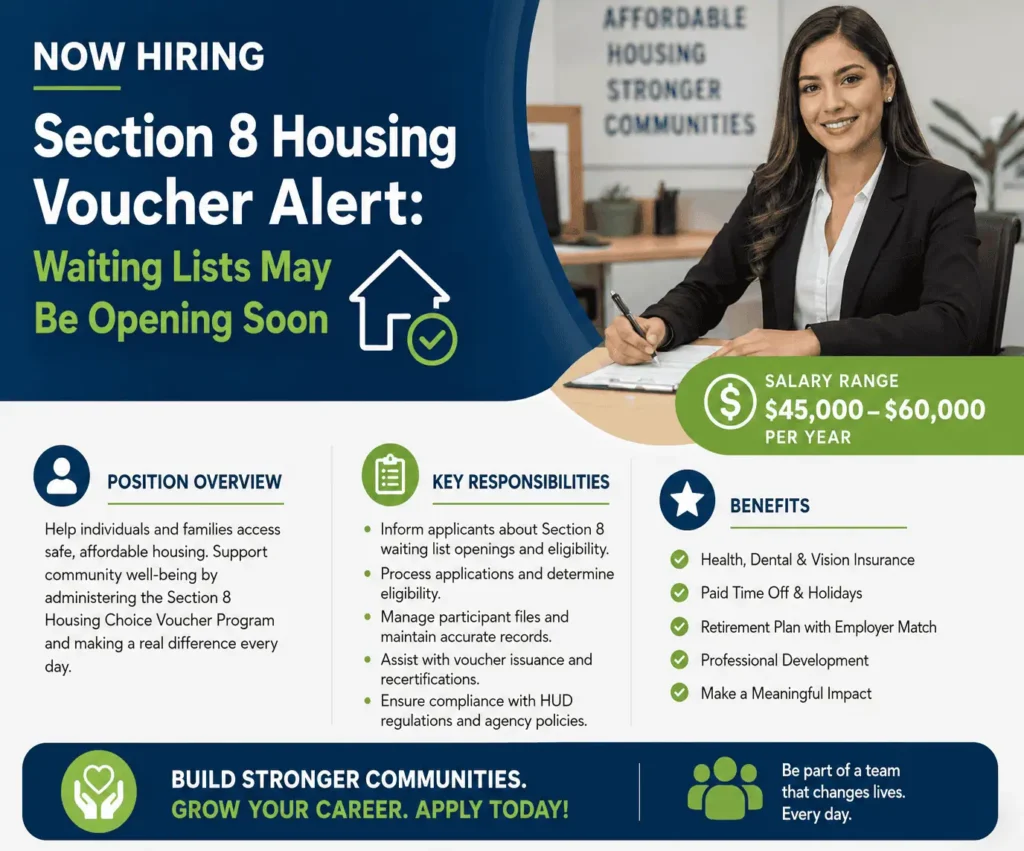
Finding affordable housing has become one of the biggest challenges for millions of Americans. As rent prices continue to rise in many communities, families, seniors, veterans, and individuals with disabilities are looking for programs that can help make housing more affordable. One of the most well-known options is the Housing Choice Voucher Program, commonly referred to as Section 8.
Because demand for rental assistance is extremely high, waiting lists often remain closed for months—or even years. However, housing authorities across the country periodically reopen their waiting lists as funding becomes available or existing applicants are served. That means families who have been waiting for an opportunity to apply should stay informed, as new application periods may become available throughout the year.
If you’ve been hoping to receive rental assistance, now is an excellent time to learn how the program works, who may qualify, and how to prepare before a waiting list opens in your area.
What Is the Section 8 Housing Choice Voucher Program?
The Housing Choice Voucher Program is a federal rental assistance program administered by the U.S. Department of Housing and Urban Development (HUD) and operated locally by Public Housing Agencies (PHAs).
Rather than placing families in government-owned housing, the program helps eligible households pay a portion of their monthly rent for privately owned housing that meets program requirements.
Once approved, participants generally contribute part of their household income toward rent, while the voucher covers the remaining eligible amount within program limits.
The goal is to help low-income households obtain safe, decent, and affordable housing while allowing them to choose where they live, provided the landlord participates and the unit meets program standards.
Why Are Waiting Lists So Important?
Unlike many assistance programs, Section 8 cannot approve every eligible applicant immediately.
Funding is limited, and demand greatly exceeds the number of vouchers available.
As a result, most housing authorities maintain waiting lists.
When a waiting list closes, new applications are not accepted until the housing authority decides it has enough capacity to process additional applicants.
When lists reopen, application windows are sometimes available for only a few days.
Because of this, staying informed can significantly improve your chances of submitting an application on time.
Could Waiting Lists Open Soon?
Housing authorities decide independently when to open or close their waiting lists.
Across the United States, some waiting lists are currently open, some are scheduled to open soon, while others remain closed depending on local demand and funding.
This means that even if your local housing authority is not accepting applications today, new opportunities could become available later in the year.
Checking regularly is one of the best ways to avoid missing an application period.
Who May Qualify?
Although eligibility varies slightly by local housing authority, applicants generally must meet several requirements.
Factors commonly considered include:
- Household income.
- Family size.
- Citizenship or eligible immigration status.
- Background screening requirements.
- Local housing authority rules.
Many housing authorities give priority to applicants facing particularly difficult circumstances.
Priority categories may include:
- Families with children.
- Older adults.
- Individuals with disabilities.
- Veterans.
- People experiencing homelessness.
- Victims of domestic violence, where applicable.
Priority policies differ by housing authority.
Income Requirements
Income is one of the most important eligibility factors.
Most Housing Choice Voucher applicants must fall below income limits established for their area.
Because housing costs vary across the country, income limits are different in every county and metropolitan area.
Larger households generally qualify under higher income limits than smaller households.
Local housing authorities use area median income calculations published by HUD when determining eligibility.
How Does the Voucher Work?
After receiving a voucher, participants search for housing that meets program requirements.
Eligible units may include:
- Apartments.
- Townhomes.
- Single-family homes.
- Duplexes.
- Certain manufactured homes.
The selected property must:
- Meet HUD housing quality standards.
- Fall within allowable rent limits.
- Be approved by the local housing authority.
The landlord must also agree to participate in the program.
Can You Choose Where You Live?
One of the biggest advantages of the Housing Choice Voucher Program is flexibility.
Unlike traditional public housing, voucher recipients can often choose among qualifying rental properties in the private market.
After meeting certain program requirements, some participants may even transfer—or “port”—their voucher to another city or state through portability rules.
This flexibility can help families move closer to employment opportunities, schools, or relatives.
How Do You Apply?
Applications are submitted through the Public Housing Agency serving your area.
Many agencies now accept applications online whenever their waiting lists are open.
The application typically asks for information such as:
- Household members.
- Income.
- Employment.
- Current address.
- Contact information.
- Household expenses.
Submitting an application does not guarantee immediate assistance.
Instead, eligible applicants are usually placed on the waiting list.
Documents You May Need
Preparing your paperwork in advance can save valuable time if a waiting list opens unexpectedly.
Commonly requested documents include:
- Government-issued identification.
- Social Security numbers.
- Birth certificates.
- Proof of income.
- Recent pay stubs.
- Tax documents.
- Bank statements.
- Benefit award letters.
- Rental history.
- Immigration documentation, if applicable.
Some housing authorities may request additional information during the eligibility review.
How Long Is the Wait?
Unfortunately, there is no single answer.
Waiting times vary widely across the country.
Some applicants receive assistance within months, while others remain on waiting lists for several years.
The length of the wait depends on:
- Available funding.
- Number of applicants.
- Local housing demand.
- Turnover of existing voucher holders.
- Housing authority policies.
Because waiting periods can be lengthy, applying as soon as a list opens is often important.
What Happens After You’re Selected?
If your name reaches the top of the waiting list, the housing authority will usually contact you.
Applicants may then be asked to:
- Verify household income.
- Confirm household size.
- Submit updated documents.
- Attend an eligibility appointment.
- Complete additional paperwork.
If approved, the housing authority issues a voucher that can be used to begin searching for qualifying housing.
Common Reasons Applications Are Denied
Not every application results in approval.
Some common reasons include:
- Income exceeding local limits.
- Missing required documentation.
- Failure to respond to agency requests.
- Providing inaccurate information.
- Failing eligibility or background requirements established by the local housing authority.
Keeping your contact information current is extremely important while on a waiting list.
Tips to Prepare Before a Waiting List Opens
If you’re interested in applying, consider taking these steps now:
- Gather your identification and income documents.
- Keep copies of important paperwork.
- Update your mailing address and phone number.
- Check your local housing authority’s website regularly.
- Watch for announcements about upcoming application periods.
- Submit your application promptly whenever a waiting list opens.
Being prepared can help you avoid missing short application windows.
Frequently Asked Questions
Is Section 8 available in every state?
Yes. The Housing Choice Voucher Program is available nationwide, although each Public Housing Agency manages its own waiting list and application process.
Are waiting lists always open?
No. Many waiting lists remain closed for extended periods because of high demand. Others open periodically for a limited time.
Does applying guarantee a voucher?
No. Submitting an application usually places you on a waiting list if you meet initial requirements. Receiving a voucher depends on availability and local program rules.
Can working families qualify?
Yes. Employment does not automatically disqualify applicants. Many working households qualify if their income falls within local program limits.
Can I move after receiving a voucher?
In many cases, yes. Participants may choose eligible rental units, and some may later transfer their voucher to another jurisdiction under portability rules if program requirements are met.
Why It’s Worth Checking Regularly
Housing authorities across the country open and close waiting lists independently, meaning opportunities can appear throughout the year. Some agencies announce openings weeks in advance, while others provide only a short application period. Recent updates show that while many waiting lists remain closed, others are open now or scheduled to open soon depending on the location.
Because application windows can be brief and demand is extremely high, checking your local housing authority’s announcements regularly may help you avoid missing an opportunity to apply.
Final Thoughts
The Section 8 Housing Choice Voucher Program continues to be one of the nation’s most important rental assistance programs, helping low-income families, seniors, veterans, and individuals with disabilities access affordable housing in the private rental market. Although waiting lists can be long, they are periodically reopened by local housing authorities as funding and voucher availability change.
If you’ve been considering applying, now is a great time to prepare. Gathering your documents, understanding the eligibility requirements, and monitoring announcements from your local Public Housing Agency can put you in the best position to submit an application when a waiting list becomes available. Staying informed today could help you take advantage of the next opportunity for rental assistance in your community.
Section 8 waiting lists may be opening soon in certain areas, giving eligible low-income families, seniors and individuals with disabilities the opportunity to apply for housing vouchers.
CHECK HERE FOR SECTION 8 HOUSING ASSISTANCE IN THE UNITED STATES
- Section 8 Program Overview 🇺🇸
- Find Local Housing Authorities 🇺🇸
- Apply for Housing Assistance 🇺🇸
- Check Eligibility for Housing Benefits 🇺🇸