
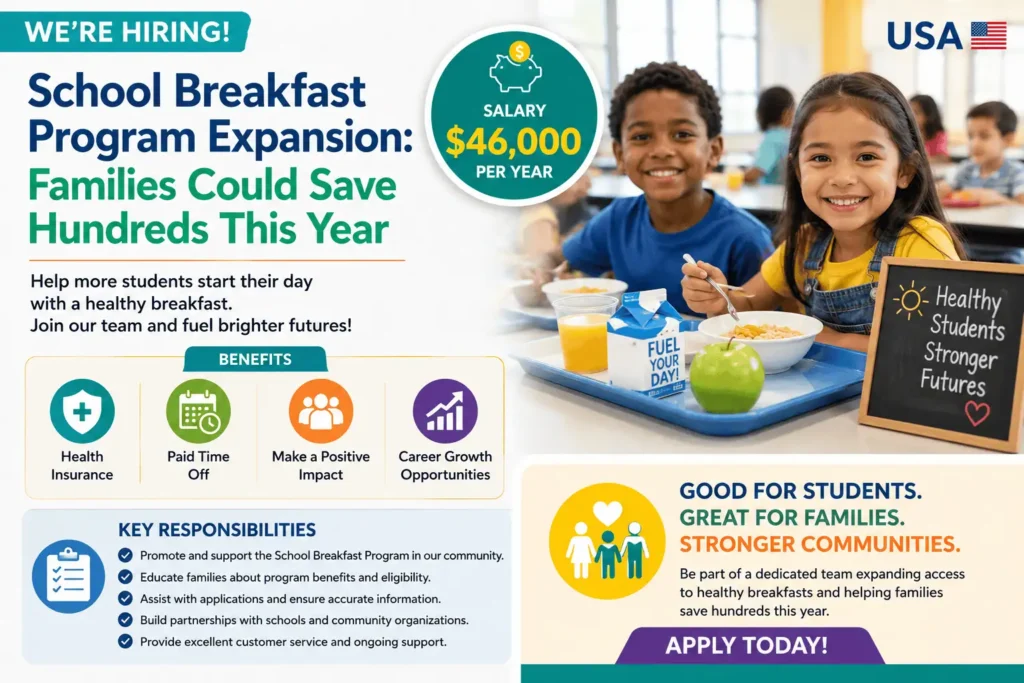
With the cost of groceries remaining high, many American families are searching for practical ways to reduce monthly expenses without sacrificing their children’s nutrition. One program that continues to make a significant difference is the School Breakfast Program (SBP), a federally supported initiative that provides healthy breakfasts to millions of students attending participating schools across the United States.
In recent years, expanded access to school breakfast programs, updated eligibility guidelines, and an increasing number of schools offering free meals to all students have made it easier for families to receive assistance. As a result, many parents could save hundreds of dollars each school year simply by taking advantage of the breakfast benefits already available through their child’s school.
If you’re wondering whether your child qualifies for free or reduced-price breakfasts—or whether your school now offers breakfast at no cost to every student—understanding the latest program updates could help your family lower grocery costs while ensuring your child starts each school day with a nutritious meal.
Here’s everything you need to know about the School Breakfast Program and how your family could benefit.
What Is the School Breakfast Program?
The School Breakfast Program (SBP) is a federally assisted child nutrition program administered by the U.S. Department of Agriculture (USDA). It provides reimbursement to states and participating schools so they can offer nutritious breakfasts to students attending public schools, nonprofit private schools, and certain residential child care institutions.
The program was established to ensure children begin the school day with a healthy meal, helping support learning, concentration, and overall well-being.
Today, millions of children receive breakfast through the School Breakfast Program every school day.
Why Is the Program Expanding?
Across the country, more schools are participating in the School Breakfast Program and adopting innovative service models that make breakfast easier to access.
Many districts now offer:
- Breakfast served in the classroom.
- Grab-and-go breakfast stations.
- Breakfast after the first bell.
- Free breakfast for all students through qualifying federal provisions.
These approaches help increase student participation while reducing barriers that previously prevented some children from eating breakfast before class.
Who May Qualify?
Children attending participating schools may qualify for:
- Free school breakfast.
- Reduced-price breakfast where applicable.
- Full-price breakfast.
Eligibility is generally based on:
- Household income.
- Household size.
- Participation in qualifying public assistance programs.
- Attendance at schools participating in certain federal meal options.
Some students are automatically eligible without submitting a meal application if their household participates in programs such as SNAP or TANF.
Income Guidelines Are Updated Each Year
Each school year, the USDA updates the income eligibility guidelines used to determine qualification for free or reduced-price meals.
Because these limits are adjusted annually, some families who did not qualify in previous years may now become eligible.
Household size plays an important role, with larger families generally qualifying at higher income levels.
Parents who have not checked eligibility recently should consider reviewing the newest income guidelines.
Community Eligibility Provision Means Free Meals for Everyone
One of the biggest changes benefiting families is the continued expansion of the Community Eligibility Provision (CEP).
Schools that qualify for CEP can provide breakfast and lunch free of charge to every enrolled student, regardless of household income. Families attending these schools often do not need to complete individual meal applications for their children to receive free meals.
This expansion has helped reduce paperwork while increasing participation among students.
How Much Could Families Save?
The financial savings can be substantial.
Families with multiple children often spend significant amounts preparing breakfast before school each week.
When children receive breakfast at school, parents may spend less on:
- Breakfast cereal.
- Milk.
- Bread.
- Eggs.
- Fruit.
- Yogurt.
- Juice.
- Grab-and-go breakfast items.
Over the course of an entire school year, these savings can add up to hundreds of dollars, especially for larger households.
The exact amount varies depending on family size and individual grocery habits.
What Foods Are Included?
School breakfasts must meet federal nutrition standards established by the USDA.
Meals commonly include:
- Whole grains.
- Fresh fruit.
- Fruit juice within program guidelines.
- Low-fat or fat-free milk.
- Whole-grain cereals.
- Oatmeal.
- Yogurt.
- Eggs in participating schools.
- Breakfast sandwiches.
- Other nutritious breakfast items approved by local school districts.
Menus vary from school to school but must follow federal nutritional requirements.
Why Breakfast Matters
A healthy breakfast provides important nutritional benefits for children.
Studies have shown that students who regularly eat breakfast are often better prepared to:
- Focus during class.
- Participate in learning activities.
- Maintain energy throughout the morning.
- Support healthy growth and development.
- Develop consistent school attendance habits.
The School Breakfast Program was created not only to reduce food insecurity but also to support educational success.
Can Private Schools Participate?
Yes.
Many nonprofit private schools participate in the School Breakfast Program.
Parents whose children attend participating private schools should contact the school’s nutrition office to learn whether breakfast benefits are available.
How Do Families Apply?
If your child’s school requires applications, the process is usually straightforward.
Parents generally need to provide:
- Household income information.
- Number of household members.
- Participation in qualifying assistance programs, if applicable.
- Certification that the information is accurate.
Many school districts now allow families to submit applications online.
Some schools participating in CEP or direct certification may not require an application at all.
Documents You May Need
Depending on your school district, you may be asked to provide:
- Recent pay stubs.
- Benefit award letters.
- Identification information.
- Documentation of participation in qualifying assistance programs.
- Proof of household income if requested.
Submitting complete information helps schools process applications more quickly.
Can Families Apply During the School Year?
Yes.
Parents generally do not have to wait until the beginning of the school year.
If your family’s financial situation changes because of:
- Job loss.
- Reduced work hours.
- Lower household income.
- Changes in family size.
your child may become eligible later in the school year.
Schools often accept new applications throughout the year.
Automatic Eligibility Through Other Programs
Many children qualify automatically because their household already participates in certain public assistance programs.
Automatic eligibility may apply when households receive benefits through:
- Supplemental Nutrition Assistance Program (SNAP).
- Temporary Assistance for Needy Families (TANF).
- Food Distribution Program on Indian Reservations (FDPIR).
Schools frequently receive this information through state verification systems, reducing paperwork for families.
Common Reasons Applications Are Delayed
Most delays occur because of:
- Missing income documentation.
- Incomplete applications.
- Missing household information.
- Failure to sign required forms.
- Requests for additional verification.
Carefully reviewing the application before submission can help avoid unnecessary delays.
Frequently Asked Questions
Does every school offer free breakfast?
No. Participation depends on the individual school or district. Some schools provide free breakfast to every student through the Community Eligibility Provision, while others determine eligibility based on household income.
Can working families qualify?
Yes. Many households with employed parents qualify for free or reduced-price school meals based on household income and family size.
Can children receive both breakfast and lunch?
Yes. Many participating schools offer both the School Breakfast Program and the National School Lunch Program, allowing eligible students to receive nutritious meals throughout the school day.
Can I apply if my financial situation changes?
Yes. Families can generally submit a new application whenever their household income or financial circumstances change during the school year.
Are school breakfasts healthy?
Yes. Meals must meet USDA nutrition standards designed to provide balanced breakfasts that support children’s health and learning.
Tips for Parents
If you believe your family may benefit from the School Breakfast Program, consider these helpful suggestions:
- Contact your child’s school before the school year begins.
- Ask whether the school participates in the School Breakfast Program.
- Find out whether your school offers breakfast free to all students.
- Complete meal applications promptly if required.
- Report changes in household income when they occur.
- Keep copies of all submitted documents.
A few minutes spent reviewing your child’s eligibility could lead to meaningful savings throughout the school year.
Why This Program Matters
For many families, school breakfast provides more than convenience—it helps ensure children begin each day with nutritious food while reducing pressure on household grocery budgets.
With food prices continuing to challenge many households, programs like the School Breakfast Program allow parents to redirect money toward other essential expenses such as rent, utilities, transportation, school supplies, or healthcare.
At the same time, children benefit from balanced meals that support learning, concentration, and healthy development.
Final Thoughts
The continued expansion of the School Breakfast Program is creating new opportunities for families to reduce food expenses while giving children access to healthy, nutritious meals every school morning. Whether your child qualifies through household income, automatic certification, or attends a school that offers free breakfast to every student, it’s worth exploring the benefits available in your district.
If you haven’t checked your eligibility recently, now is an excellent time to review your school’s meal program and learn about the latest updates. Taking advantage of the School Breakfast Program could save your family hundreds of dollars over the course of the school year while helping your child start each day ready to learn, grow, and succeed.
Expanded school breakfast programs may help families save money by providing free or low-cost meals to eligible students, reducing household food expenses throughout the school year.
CHECK HERE FOR SCHOOL BREAKFAST PROGRAMS IN THE UNITED STATES
- School Breakfast Program Overview 🇺🇸
- Apply for School Meal Benefits 🇺🇸
- Check Eligibility for Food Assistance 🇺🇸
- Child Nutrition Programs 🇺🇸