
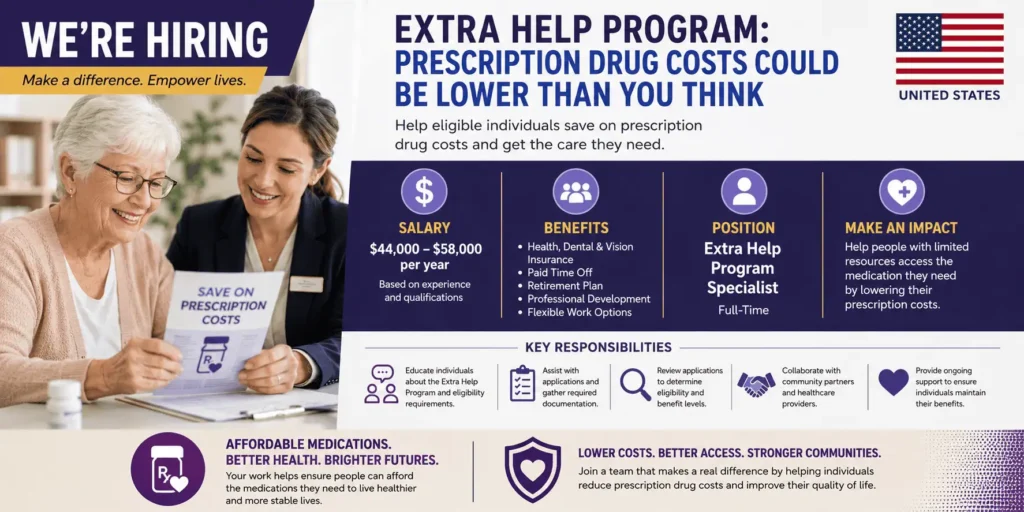
Prescription medications are an essential part of healthcare for millions of Americans, especially older adults and people living with disabilities. From medications that help manage diabetes and high blood pressure to treatments for heart disease, asthma, and other chronic conditions, prescription drugs can play a vital role in maintaining health and quality of life.
Unfortunately, the cost of prescription medications can place a significant financial burden on many households. Even individuals with Medicare may find that monthly premiums, deductibles, copayments, and coinsurance for prescription drug coverage add up quickly over the course of a year.
Fortunately, there is a federal assistance program that may help eligible Medicare beneficiaries lower these expenses. Known as the Extra Help Program, or the Part D Low-Income Subsidy (LIS), this benefit helps qualifying individuals pay for Medicare Part D prescription drug costs. Depending on a person’s income and resources, the program may significantly reduce premiums, deductibles, and the amount paid for covered prescription medications. (ssa.gov)
Many people who qualify never apply because they are unaware the program exists or mistakenly believe they earn too much to receive assistance. If you have Medicare and struggle with the cost of prescription medications, reviewing the latest Extra Help eligibility requirements could help you save money on your healthcare expenses.
What Is the Extra Help Program?
The Extra Help Program is a federal benefit that assists eligible Medicare beneficiaries with the costs associated with Medicare Part D prescription drug coverage.
The program is administered by the Social Security Administration (SSA) and works alongside Medicare to reduce out-of-pocket prescription drug expenses for qualifying individuals.
Depending on eligibility, Extra Help may reduce:
- Monthly Medicare Part D premiums.
- Annual deductibles.
- Prescription drug copayments.
- Coinsurance.
- Other prescription-related costs.
For many beneficiaries, these savings make prescription medications much more affordable.
Who May Qualify?
Eligibility is generally based on:
- Enrollment in Medicare.
- Household income.
- Available financial resources.
- Other federal eligibility requirements.
Many people who receive Medicare may qualify, including:
- Seniors age 65 or older.
- Individuals under age 65 who qualify for Medicare because of a disability.
- Certain people with limited income and resources.
Income and resource limits are updated periodically, so even individuals who did not qualify in previous years may wish to review current guidelines.
How Much Could You Save?
The amount of savings depends on each person’s financial situation and level of eligibility.
Eligible beneficiaries may receive assistance with:
- Medicare Part D monthly premiums.
- Prescription drug deductibles.
- Copayments for covered medications.
- Coinsurance costs.
Some individuals may pay only a small copayment for covered generic and brand-name medications, while others may receive additional reductions depending on their eligibility category. (ssa.gov)
The exact savings vary from one beneficiary to another.
Why Prescription Drug Costs Continue to Rise
Prescription medications have become increasingly expensive for many Americans.
Several factors can influence medication costs, including:
- Brand-name versus generic medications.
- Insurance plan coverage.
- Pharmacy pricing.
- Annual Medicare plan changes.
- Manufacturer pricing.
Without financial assistance, these costs can become difficult for retirees living on fixed incomes.
The Extra Help Program is intended to reduce some of this financial burden.
Who Automatically Qualifies?
Some individuals are automatically enrolled in the Extra Help Program without submitting a separate application.
Automatic qualification may apply to certain people who receive:
- Full Medicaid benefits.
- A Medicare Savings Program.
- Supplemental Security Income (SSI).
These individuals generally receive information notifying them of their automatic eligibility. (medicare.gov)
Even if someone does not qualify automatically, they may still be eligible by applying directly.
Can Working Medicare Beneficiaries Qualify?
Yes.
Receiving income from employment does not automatically prevent someone from qualifying.
Eligibility depends on overall household income and available resources rather than employment status alone.
Some working adults with disabilities who receive Medicare may also qualify.
Income and Resource Limits
The Extra Help Program considers both income and certain financial resources.
Examples of income may include:
- Social Security benefits.
- Retirement income.
- Employment earnings.
- Pension payments.
- Other qualifying income.
Examples of resources may include:
- Savings accounts.
- Checking accounts.
- Investments.
- Certain financial assets.
However, some items generally do not count toward resource limits, including:
- Your primary residence.
- One personal vehicle.
- Personal belongings.
- Household goods.
Applicants should review current federal guidelines because eligibility rules can change over time.
Can Married Couples Apply?
Yes.
Married couples may apply together if both spouses meet Medicare eligibility requirements.
Household income and resources are generally considered when determining eligibility.
Each spouse’s Medicare status and financial information may affect the final determination.
How Does the Program Work?
Once approved, Extra Help works together with the beneficiary’s Medicare Part D prescription drug plan.
Depending on eligibility, the program may:
- Lower monthly premium costs.
- Reduce or eliminate deductibles.
- Decrease prescription copayments.
- Limit annual out-of-pocket expenses for covered medications.
Beneficiaries continue using their Medicare prescription drug plan while receiving the additional financial assistance.
What Documents May Be Needed?
Applicants may be asked to provide:
- Medicare information.
- Social Security number.
- Proof of income.
- Bank account information.
- Investment information.
- Retirement income statements.
- Documentation regarding financial resources.
Providing complete and accurate information helps speed the application process.
How Do You Apply?
Individuals who are not automatically enrolled may apply through the Social Security Administration.
The general process includes:
- Completing an application.
- Providing financial information.
- Submitting any requested documentation.
- Waiting for an eligibility determination.
Applications may be completed online, by phone, or through a local Social Security office. (ssa.gov)
Can You Receive Extra Help Along With Other Programs?
Yes.
Many beneficiaries receive Extra Help alongside other assistance programs.
For example, individuals enrolled in a Medicare Savings Program often automatically qualify for Extra Help.
Some beneficiaries may also receive:
- Medicaid.
- Supplemental Security Income (SSI).
- Other state assistance programs.
Receiving one benefit does not necessarily prevent eligibility for another.
Common Reasons People Miss Out
Many eligible beneficiaries never receive Extra Help because they:
- Have never heard of the program.
- Assume they earn too much.
- Believe Medicare automatically covers all prescription costs.
- Do not realize financial limits change periodically.
- Never submit an application.
Reviewing eligibility each year can help prevent missing valuable assistance.
Common Mistakes When Applying
Applications may be delayed because of:
- Missing financial information.
- Incomplete applications.
- Incorrect income reporting.
- Failure to submit requested documents.
- Outdated contact information.
Carefully reviewing the application before submission can help avoid unnecessary delays.
Frequently Asked Questions
Do I need Medicare Part D to receive Extra Help?
Yes. The program is designed to assist with Medicare Part D prescription drug costs.
Is the Extra Help Program the same as Medicaid?
No. Extra Help is a separate federal program that specifically assists with Medicare Part D prescription drug expenses, although some Medicaid beneficiaries qualify automatically.
Can I apply every year?
Yes. Individuals who believe they qualify may apply, and eligibility may change if income or financial circumstances change.
Can I receive Extra Help if I own a home?
Yes. Your primary residence generally is not counted as a financial resource when determining eligibility. (ssa.gov)
Will Extra Help eliminate all prescription drug costs?
Not necessarily. The program helps reduce eligible Medicare Part D expenses, but the exact amount of assistance depends on individual eligibility and plan details.
Tips to Maximize Prescription Drug Savings
Beneficiaries can improve their chances of reducing medication costs by:
- Reviewing eligibility each year.
- Comparing Medicare Part D plans annually.
- Updating financial information when circumstances change.
- Using participating network pharmacies.
- Asking healthcare providers about generic alternatives when appropriate.
- Keeping all Medicare and financial documents organized.
These simple steps may help lower annual prescription drug expenses.
Why the Extra Help Program Matters
Many Medicare beneficiaries rely on daily medications to manage chronic health conditions and maintain their overall well-being. High prescription costs may cause some individuals to delay filling prescriptions, skip doses, or stop taking medications altogether, potentially leading to more serious health problems.
The Extra Help Program helps reduce these financial barriers by making prescription drugs more affordable for eligible Medicare beneficiaries.
By lowering out-of-pocket costs, the program supports better access to necessary medications and can help individuals stay on track with their treatment plans while protecting their household budgets.
Final Thoughts
The Extra Help Program remains one of the most valuable forms of financial assistance available to Medicare beneficiaries with limited income and resources. By helping pay Medicare Part D premiums, deductibles, and prescription drug copayments, the program can significantly reduce healthcare costs for eligible individuals.
If you have Medicare and pay for prescription medications, reviewing your eligibility for Extra Help may be worthwhile. Many people who qualify never apply simply because they are unaware the program exists or assume they do not meet the requirements.
Taking a few minutes to review current eligibility guidelines, gather the necessary financial information, and submit an application could help you lower your prescription drug costs and make essential medications more affordable throughout the year.
Eligible Medicare beneficiaries may qualify for the Extra Help Program to reduce prescription drug costs, including premiums, deductibles and medication expenses through Medicare Part D assistance.
CHECK HERE FOR EXTRA HELP PROGRAM INFORMATION IN THE UNITED STATES
- Extra Help Program Details 🇺🇸
- Medicare Prescription Drug Assistance 🇺🇸
- Medicare Benefits Information 🇺🇸
- Find Healthcare Assistance Programs 🇺🇸