
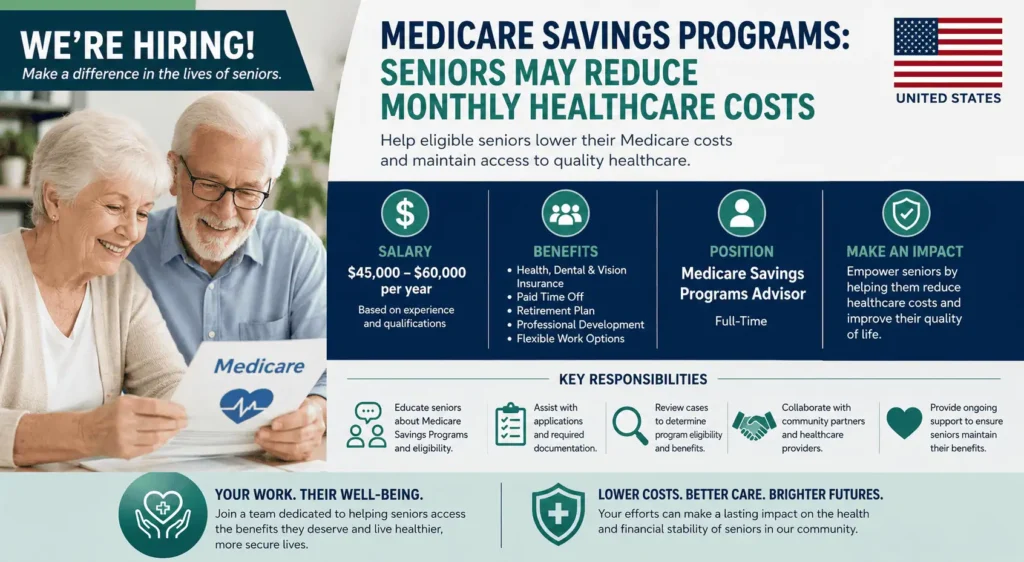
Healthcare expenses remain one of the largest financial concerns for older adults in the United States. While Medicare provides essential health insurance for millions of seniors and certain younger individuals with disabilities, many beneficiaries still face out-of-pocket costs such as monthly premiums, deductibles, coinsurance, and copayments. These expenses can become difficult to manage, especially for people living on fixed retirement incomes.
Fortunately, many Medicare beneficiaries may qualify for additional financial assistance through Medicare Savings Programs (MSPs). These state-administered programs help eligible individuals pay some of the costs associated with Medicare, potentially saving beneficiaries hundreds or even thousands of dollars each year. Depending on income and resources, an eligible person may receive assistance paying Medicare Part A and Part B premiums, deductibles, coinsurance, or copayments. (medicare.gov)
Unfortunately, many people who qualify never apply because they are unaware these programs exist or mistakenly believe they earn too much to qualify. If you currently receive Medicare or expect to enroll soon, reviewing the latest Medicare Savings Program requirements could help lower your healthcare expenses.
What Are Medicare Savings Programs?
Medicare Savings Programs are assistance programs that help eligible Medicare beneficiaries pay certain Medicare-related costs.
Although these programs are funded jointly by the federal government and the states, each state administers its own program and processes applications according to federal guidelines.
Depending on your eligibility, a Medicare Savings Program may help pay for:
- Medicare Part A premiums (when applicable).
- Medicare Part B monthly premiums.
- Deductibles.
- Coinsurance.
- Copayments.
For many beneficiaries, these savings can make healthcare much more affordable throughout the year.
Why Are Medicare Savings Programs Important?
Even with Medicare coverage, beneficiaries are often responsible for several ongoing medical expenses.
These may include:
- Monthly Part B premiums.
- Hospital deductibles.
- Outpatient cost-sharing.
- Coinsurance for medical services.
- Prescription-related expenses through separate programs.
For seniors living on retirement income, these costs can consume a significant portion of their monthly budget.
Medicare Savings Programs are designed to reduce these financial burdens for individuals with limited income and resources.
Who May Qualify?
Eligibility varies by program and by state, but applicants generally must:
- Be enrolled in Medicare Part A.
- Meet income requirements.
- Meet resource or asset limits where applicable.
- Reside in the state where they apply.
- Meet additional state eligibility requirements.
Because income limits are updated periodically, individuals who did not qualify in previous years may want to check current eligibility standards.
The Different Types of Medicare Savings Programs
There are several categories of Medicare Savings Programs, each providing different levels of assistance.
Qualified Medicare Beneficiary (QMB) Program
The Qualified Medicare Beneficiary program provides the most comprehensive assistance.
For eligible beneficiaries, the program may help pay:
- Medicare Part A premiums.
- Medicare Part B premiums.
- Deductibles.
- Coinsurance.
- Copayments.
Individuals enrolled in QMB generally cannot be billed for Medicare-covered services beyond very limited circumstances. (medicare.gov)
Specified Low-Income Medicare Beneficiary (SLMB) Program
The SLMB program primarily helps pay the Medicare Part B monthly premium for eligible individuals whose income is slightly higher than the QMB limits.
Qualifying Individual (QI) Program
The Qualifying Individual program also helps pay Medicare Part B premiums.
Funding for this program is limited each year, and benefits are generally awarded on a first-come, first-served basis to eligible applicants who apply on time. (medicare.gov)
Qualified Disabled and Working Individuals (QDWI) Program
The QDWI program helps certain disabled individuals who returned to work and lost premium-free Medicare Part A coverage.
Eligibility requirements differ from the other Medicare Savings Programs.
How Much Could You Save?
The amount of financial assistance depends on the specific program for which you qualify.
Potential savings may include:
- Payment of Medicare Part B premiums.
- Assistance with Part A premiums.
- Reduced deductibles.
- Lower coinsurance.
- Lower copayments.
For many beneficiaries, these savings can significantly reduce annual healthcare expenses.
Income and Resource Requirements
Eligibility is based largely on:
- Monthly income.
- Household size.
- Countable resources.
Examples of resources that may be considered include:
- Bank accounts.
- Certain investments.
- Other financial assets.
However, many assets—including a primary residence, one vehicle, and personal belongings—may not count toward resource limits under federal rules.
Because limits change over time, applicants should review the most recent state guidelines.
Can Working Seniors Qualify?
Yes.
Some Medicare beneficiaries continue working after becoming eligible for Medicare.
Employment does not automatically disqualify someone from Medicare Savings Programs.
Eligibility depends on overall income, resources, and program requirements.
Can People Under Age 65 Qualify?
Yes.
Some individuals under age 65 who qualify for Medicare because of disability may also qualify for Medicare Savings Programs if they meet the applicable eligibility requirements.
Additional Benefits for Many Participants
Many individuals who qualify for a Medicare Savings Program may also automatically qualify for the Extra Help program, which assists with Medicare Part D prescription drug costs. This additional benefit can reduce prescription expenses, including premiums and copayments, for eligible beneficiaries. (ssa.gov)
Receiving both forms of assistance can substantially reduce overall healthcare costs.
What Documents May Be Needed?
When applying, individuals may be asked to provide:
- Medicare card.
- Proof of identity.
- Proof of income.
- Social Security benefit information.
- Bank account information.
- Retirement income statements.
- Asset documentation if required.
- Proof of state residency.
Providing complete information can help speed up the application process.
How Do You Apply?
Applications are generally submitted through the state Medicaid agency or another designated state office.
Although the process varies by state, applicants typically need to:
- Complete an application.
- Provide requested financial information.
- Submit supporting documentation.
- Wait for an eligibility determination.
Some states also allow online applications.
Applicants should carefully follow their state’s instructions.
Common Reasons Eligible Seniors Miss Out
Many beneficiaries never apply because they:
- Assume they earn too much.
- Do not know the programs exist.
- Believe Medicare automatically includes this assistance.
- Think the application process is too difficult.
- Previously did not qualify and have not checked updated limits.
Because eligibility standards may change over time, reviewing current requirements can be worthwhile.
Common Mistakes When Applying
Some common issues that delay approval include:
- Missing documents.
- Incorrect income information.
- Incomplete applications.
- Failure to report household changes.
- Waiting too long to respond to requests for additional information.
Carefully reviewing your application before submission may help avoid unnecessary delays.
Frequently Asked Questions
Do Medicare Savings Programs replace Medicare?
No. These programs help pay certain Medicare costs but do not replace Medicare coverage.
Can I qualify if I already receive Social Security retirement benefits?
Yes. Many Social Security beneficiaries also qualify for Medicare Savings Programs if they meet income and resource requirements.
Do all states offer these programs?
Yes. Medicare Savings Programs are available nationwide, although states administer them individually under federal guidelines.
Can married couples apply?
Yes. Married individuals may apply, and eligibility is based on the applicable household income and resource rules.
If I was denied before, should I apply again?
Possibly. Income limits and personal circumstances may change over time, so some individuals who were previously ineligible may later qualify.
Tips to Maximize Healthcare Savings
Beneficiaries can improve their chances of receiving assistance by:
- Reviewing current eligibility guidelines each year.
- Keeping income records organized.
- Reporting changes in household circumstances.
- Applying promptly if they believe they qualify.
- Exploring other Medicare assistance programs.
- Comparing available prescription drug assistance options.
Taking a few minutes to review available benefits could lead to meaningful savings.
Why Medicare Savings Programs Matter
Healthcare costs continue to rise, and many retirees live on fixed monthly incomes. Even relatively small expenses such as Medicare premiums and cost-sharing can affect a household’s budget over time.
Medicare Savings Programs help reduce these financial pressures by assisting eligible beneficiaries with important Medicare expenses. Lower healthcare costs may allow seniors to better manage other essential needs such as housing, food, transportation, and prescription medications.
For individuals who qualify, these programs can improve financial stability while helping ensure continued access to necessary medical care.
Final Thoughts
Medicare Savings Programs remain one of the most valuable—but often overlooked—sources of financial assistance available to eligible Medicare beneficiaries. By helping pay Medicare premiums and, in some cases, deductibles, coinsurance, and copayments, these programs can significantly reduce healthcare expenses for qualifying seniors and people with disabilities.
If you are enrolled in Medicare or expect to become eligible soon, it may be worthwhile to review the current Medicare Savings Program requirements in your state. Many people who qualify never apply simply because they are unaware the programs exist or assume they are not eligible.
Checking your eligibility, gathering the required documentation, and submitting an application could help you reduce your monthly healthcare costs and make the most of the benefits available through Medicare.
Seniors with limited income may qualify for Medicare Savings Programs that can help reduce healthcare expenses by assisting with Medicare premiums, deductibles and other out-of-pocket costs.
CHECK HERE FOR MEDICARE SAVINGS PROGRAMS IN THE UNITED STATES
- Medicare Savings Program Details 🇺🇸
- Medicare Official Information 🇺🇸
- Medicare Assistance Resources 🇺🇸
- Find Healthcare Benefits 🇺🇸