
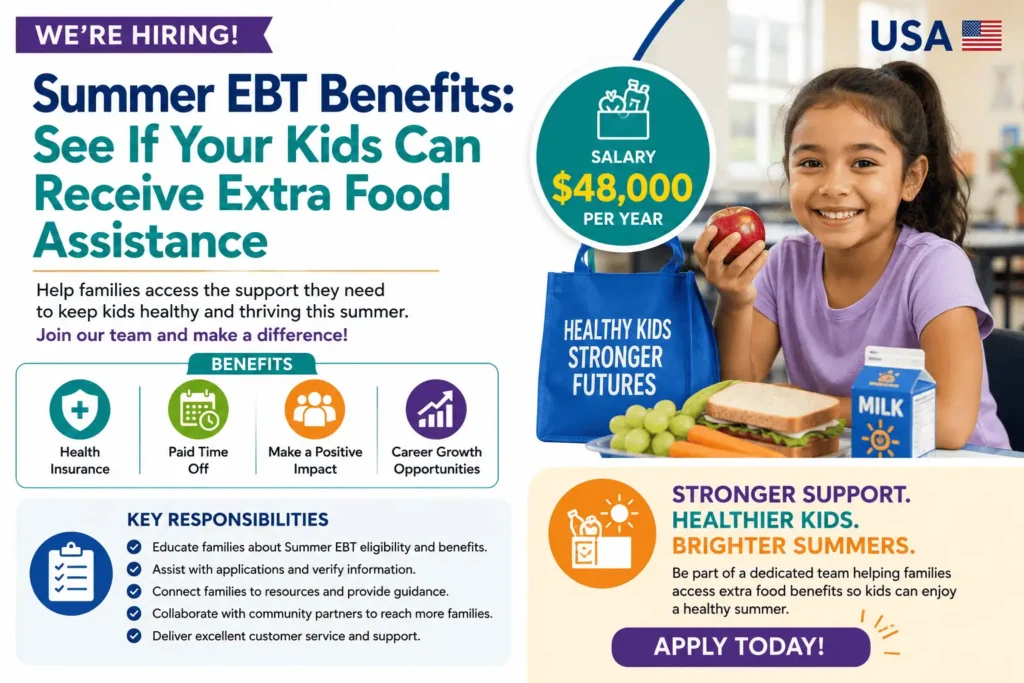
When school lets out for the summer, many families face a new challenge: replacing the free or reduced-price breakfasts and lunches their children receive during the school year. For households already dealing with rising grocery prices, the additional cost of feeding children every day can quickly add up.
To help bridge this gap, the Summer Electronic Benefits Transfer (Summer EBT) program—also known as SUN Bucks in many states—provides grocery benefits to eligible families during the summer months. The program is designed to ensure that children continue to have access to nutritious food even when school cafeterias are closed.
In 2026, eligible children can receive $120 in grocery benefits for the summer through participating states, Tribes, and territories. Many families are enrolled automatically, while others may need to submit an application depending on where they live.
If you’re wondering whether your children qualify, here’s everything you need to know about Summer EBT and how this valuable benefit could help reduce your family’s grocery bill.
What Is Summer EBT?
Summer Electronic Benefits Transfer (Summer EBT) is a federal nutrition assistance program administered by the U.S. Department of Agriculture (USDA) in partnership with participating states, Tribal organizations, and U.S. territories.
The program provides grocery benefits to eligible school-age children during the summer break, when they no longer have daily access to school breakfasts and lunches.
Benefits are typically provided through an Electronic Benefit Transfer (EBT) card or added to an existing EBT account, depending on how the program operates in each state.
How Much Can Families Receive?
For 2026, eligible children can receive a total summer benefit of $120 per child.
The benefit is based on $40 per month for the three summer months and is intended to help families purchase groceries while school is out.
For example:
- One eligible child may receive $120.
- Two eligible children could receive $240.
- Three eligible children may qualify for $360.
- Larger families could receive even more depending on the number of eligible children.
These grocery benefits are provided in addition to any regular SNAP benefits a household may already receive.
Who May Qualify?
Eligibility varies somewhat by state, but many children qualify automatically.
Generally, children may be eligible if they:
- Attend a participating school.
- Qualify for free or reduced-price school meals.
- Live in a household receiving SNAP.
- Live in a household receiving Temporary Assistance for Needy Families (TANF).
- Meet income requirements established for the program.
Some children receiving Medicaid under qualifying income rules may also be eligible in participating states.
Automatic Enrollment
One of the biggest advantages of Summer EBT is that many eligible families do not need to apply.
Children who already participate in certain public assistance programs are often automatically enrolled.
Automatic eligibility frequently includes children whose households receive:
- SNAP.
- TANF.
- Certain Medicaid benefits that meet program requirements.
- Free or reduced-price school meals through direct certification.
Families who qualify automatically are generally notified by their state agency before benefits are issued.
What If My Child Isn’t Automatically Enrolled?
Not every eligible child is automatically approved.
Some families may need to submit an application through the agency administering Summer EBT in their state.
Children who are not automatically enrolled may still qualify if the household meets the program’s income requirements.
Application procedures, deadlines, and documentation requirements vary by state, so families should review the rules where they live.
What Can Summer EBT Benefits Be Used For?
Summer EBT benefits work much like SNAP benefits and can be used to purchase many grocery items at authorized retailers.
Eligible foods generally include:
- Fresh fruits.
- Fresh vegetables.
- Frozen vegetables.
- Meat.
- Poultry.
- Fish.
- Milk.
- Cheese.
- Yogurt.
- Eggs.
- Bread.
- Rice.
- Pasta.
- Breakfast cereals.
- Snack foods.
- Non-alcoholic beverages.
- Seeds and plants that grow food.
Benefits generally cannot be used to purchase:
- Alcohol.
- Tobacco products.
- Vitamins or supplements sold as supplements.
- Hot prepared foods in most cases.
- Household supplies.
- Cleaning products.
- Pet food.
Families should always review their state’s approved purchasing guidelines.
Does Summer EBT Affect SNAP?
No.
Receiving Summer EBT does not reduce a household’s regular SNAP benefits.
Instead, Summer EBT is intended to supplement existing food assistance during the months when school meals are unavailable.
Families receiving SNAP may continue using both programs if they qualify.
Can Children Still Receive Free Summer Meals?
Yes.
Summer EBT does not replace community summer meal programs.
Many children can continue receiving free meals at participating schools, parks, recreation centers, libraries, and community organizations while also benefiting from Summer EBT if eligible.
This combination helps ensure children have access to nutritious meals throughout the summer.
How Are Benefits Delivered?
Benefit delivery varies by state.
Depending on where you live, benefits may be:
- Loaded onto an existing SNAP EBT card.
- Issued on a separate Summer EBT card.
- Delivered through another state-approved EBT method.
States notify eligible households about how and when benefits will be distributed.
Why This Program Matters
Summer can significantly increase food costs for families with school-age children.
During the school year, many students receive breakfast and lunch at school every weekday.
Once summer begins, parents often need to provide:
- Additional breakfasts.
- Additional lunches.
- More snacks.
- More beverages.
- Larger grocery purchases overall.
Summer EBT helps offset these additional expenses while supporting children’s nutrition during school breaks.
Can Working Families Qualify?
Yes.
One common misconception is that only unemployed households qualify.
In reality, many working families meet the income requirements because of household size, wages, or participation in qualifying assistance programs.
Employment alone does not determine eligibility.
How Do You Know If Your State Participates?
Most states, several Tribal organizations, and U.S. territories now participate in Summer EBT.
However, implementation details—including application procedures, payment schedules, and automatic enrollment rules—may vary.
Families should review information provided by their state’s Summer EBT agency to learn about local deadlines and eligibility requirements.
Common Reasons Families Miss Benefits
Although many children qualify, some households miss out because:
- They moved without updating their address.
- School records are outdated.
- Required applications were not submitted.
- Income information was incomplete.
- Deadlines were missed.
- The family assumed they were not eligible.
Keeping school and benefit information up to date can help avoid delays.
Frequently Asked Questions
How much does each child receive?
Eligible children receive $120 in Summer EBT grocery benefits for the 2026 summer season.
Do I have to apply?
Not always. Many eligible children are automatically enrolled. Others may need to submit an application depending on their state’s rules.
Can I receive both SNAP and Summer EBT?
Yes. Summer EBT is separate from SNAP and generally does not reduce regular SNAP benefits.
Can my child receive Summer EBT and free summer meals?
Yes. Eligible children may participate in both Summer EBT and community summer meal programs where available.
Can benefits expire?
Yes. Some states require Summer EBT benefits to be used within a specific period after they are issued. If they are not used before the expiration date established by the state, the remaining balance may be removed. Families should review the instructions that accompany their benefit card.
Tips for Parents
If you think your child may qualify, consider these helpful steps:
- Check whether your state participates in Summer EBT.
- Update your mailing address with your child’s school if it has changed.
- Watch for letters or emails from your state’s benefit agency.
- Keep your EBT card in a safe place.
- Use benefits before any applicable expiration date.
- Contact your state agency if you believe your child qualifies but has not received benefits.
Being proactive can help ensure your family receives every benefit available.
Final Thoughts
Summer EBT is helping millions of families across the United States keep healthy food on the table during the months when school meals are unavailable. By providing $120 per eligible child in grocery benefits for summer 2026, the program offers meaningful support at a time when food costs often increase for households with school-age children.
If your children receive free or reduced-price school meals, your household participates in SNAP or other qualifying assistance programs, or your family’s income meets the eligibility guidelines, it’s worth checking whether your children qualify for Summer EBT. A few minutes spent reviewing your eligibility could help reduce grocery expenses, improve your family’s food budget, and ensure your children continue to have access to nutritious meals throughout the summer.
Your children may qualify for Summer EBT benefits if they are eligible for free or reduced-price school meals, providing extra food assistance during the summer months when school is not in session.
CHECK HERE FOR SUMMER EBT BENEFITS IN THE UNITED STATES
- Summer EBT Program Overview 🇺🇸
- Apply for Food Assistance 🇺🇸
- Check Eligibility for Benefits 🇺🇸
- Find Summer Meal Sites 🇺🇸