
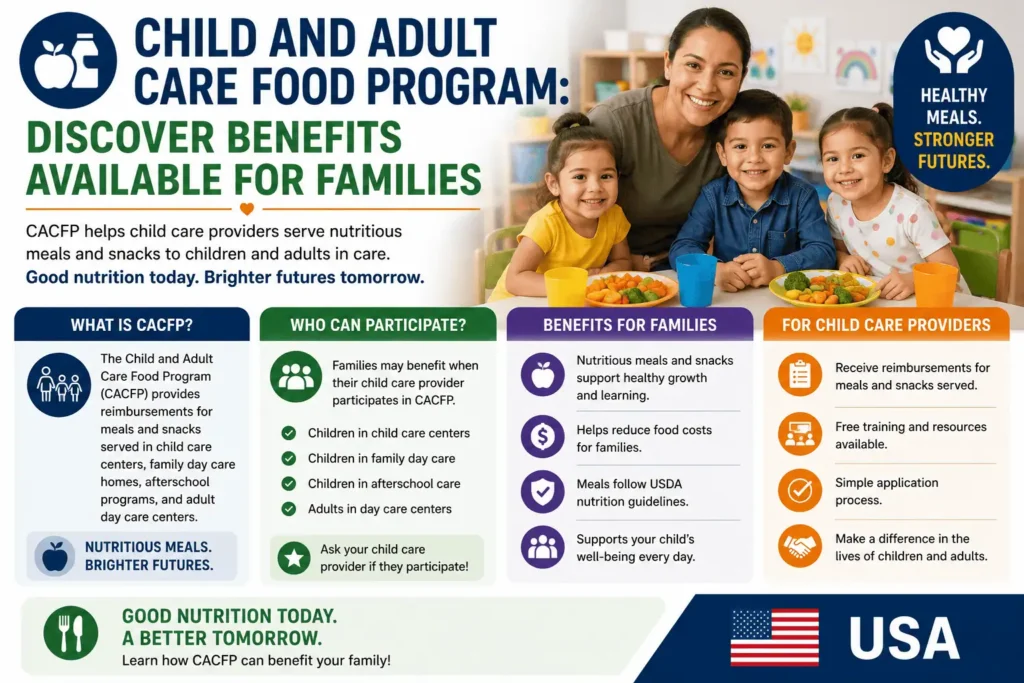
For millions of American families, the cost of providing healthy meals every day can place a significant strain on the household budget. Between daycare expenses, after-school care, rising grocery prices, and the cost of caring for young children or older adults, many households are looking for programs that can provide meaningful financial relief while ensuring their loved ones receive nutritious food.
One valuable resource that many families have never heard of is the Child and Adult Care Food Program (CACFP). This federal nutrition program helps eligible child care centers, family day care homes, after-school programs, emergency shelters, and adult day care centers provide healthy meals and snacks to children and qualifying adults in care. Instead of giving benefits directly to families, the program reimburses participating care providers for serving nutritious meals that meet USDA nutrition standards.
If your child attends a participating daycare or child care center—or if you care for an older adult who attends an eligible adult day care facility—you may already be benefiting from this program without realizing it. Here’s everything you need to know about CACFP and how it supports families across the United States.
What Is the Child and Adult Care Food Program?
The Child and Adult Care Food Program (CACFP) is a federally funded nutrition assistance program administered by the U.S. Department of Agriculture (USDA).
The program provides financial reimbursements to participating child care providers and adult day care centers for serving healthy meals and snacks to eligible participants.
Its primary goal is to improve nutrition while making quality child care and adult care more affordable and accessible.
CACFP supports:
- Child care centers.
- Family child care homes.
- Head Start programs.
- Eligible after-school care programs.
- Emergency shelters serving children.
- Adult day care centers for qualifying participants.
How Does CACFP Help Families?
Although reimbursements are paid directly to participating care providers rather than to parents, families often benefit in several important ways.
The program helps providers offer nutritious meals and snacks as part of their daily services, reducing the need for parents to pack food from home and helping control food costs for participating facilities.
For families, this may result in:
- Access to balanced meals during child care hours.
- Reduced daily food preparation.
- Lower out-of-pocket meal expenses in some programs.
- Greater confidence that children receive nutritious food while in care.
- Consistent meal quality that follows federal nutrition standards.
Who Can Benefit?
CACFP serves several groups.
Eligible participants may include:
- Infants.
- Toddlers.
- Preschool-age children.
- School-age children in eligible after-school programs.
- Children living in participating emergency shelters.
- Adults age 60 and older attending eligible adult day care centers.
- Adults with qualifying disabilities who attend participating adult day care programs.
Do Families Apply Directly?
In most cases, parents do not apply directly to the USDA for CACFP benefits.
Instead, the child care center, family child care home, or adult day care facility enrolls in the program and receives reimbursements for eligible meals served.
Parents generally need only enroll their child in a participating program and complete any required enrollment or income forms requested by the provider.
Some providers receive higher reimbursement rates for meals served to eligible low-income participants.
What Meals Are Provided?
Meals served through CACFP must meet federal nutrition standards designed to support healthy growth and development.
Depending on the time of day and type of care, participants may receive:
- Breakfast.
- Lunch.
- Dinner in qualifying programs.
- Healthy snacks.
Meals commonly include:
- Fresh fruit.
- Vegetables.
- Whole-grain bread.
- Whole-grain cereals.
- Brown rice.
- Low-fat or fat-free milk for eligible age groups.
- Yogurt.
- Cheese.
- Eggs.
- Lean meats.
- Beans.
- Peanut butter.
- Pasta.
Meals are carefully planned to provide balanced nutrition while limiting added sugars and saturated fats.
Nutrition Standards Continue to Improve
USDA periodically updates meal standards to reflect current nutrition science.
Today’s CACFP meal patterns encourage:
- More fruits and vegetables.
- Greater use of whole grains.
- Lean protein options.
- Appropriate dairy choices.
- Reduced added sugars.
- Healthier beverages.
These standards help children develop healthy eating habits that may last a lifetime.
Benefits for Working Parents
Working parents often face the challenge of preparing meals before dropping children off at daycare.
When children attend participating CACFP providers, families may benefit from knowing that nutritious meals are already included as part of the daily care program.
This can save both time and money while reducing the stress of daily meal planning.
Many parents also appreciate the consistency of federally approved nutrition standards.
Benefits for Family Child Care Homes
CACFP also supports licensed family child care homes.
Providers who participate may receive reimbursement for serving nutritious meals and snacks to children in their care.
This assistance helps smaller home-based providers continue offering affordable, high-quality child care while maintaining healthy meal options.
Adult Day Care Services
The program is not limited to children.
Eligible adult day care centers also participate in CACFP by serving nutritious meals to older adults and adults with qualifying disabilities receiving daytime care.
These meals help support health, independence, and overall well-being while giving caregivers additional peace of mind.
Can Low-Income Families Receive Additional Benefits?
Yes.
Meal reimbursement rates vary depending on eligibility and provider type.
Some participating facilities receive higher reimbursement rates for meals served to children from lower-income households.
Parents may be asked to complete confidential income forms that help providers determine the appropriate reimbursement category.
Submitting these forms may benefit both the provider and participating families.
After-School Meal Programs
CACFP also supports certain after-school programs located in eligible communities.
Children attending approved after-school care programs may receive:
- Healthy snacks.
- Nutritious suppers.
These meals provide valuable nutritional support during the hours after school while parents are still at work.
Emergency Shelters
Eligible emergency shelters serving children may also participate in CACFP.
The program helps ensure that children experiencing housing instability continue receiving healthy meals while staying in participating shelters.
This support plays an important role in reducing food insecurity during difficult times.
Why Nutrition Matters
Healthy nutrition during childhood contributes to:
- Physical growth.
- Brain development.
- Learning readiness.
- Strong immune systems.
- Healthy eating habits.
Similarly, older adults attending adult day care programs benefit from balanced meals that support overall health and nutritional well-being.
By encouraging nutritious meals across all participating settings, CACFP helps improve health outcomes for participants of all ages.
How Can You Find a Participating Provider?
If you’re interested in CACFP benefits, ask your:
- Child care center.
- Family daycare provider.
- Head Start program.
- After-school care provider.
- Adult day care center.
Many participating providers proudly display information about their involvement in the Child and Adult Care Food Program.
State agencies responsible for child nutrition programs can also help families locate participating facilities.
Common Misconceptions
Many families believe CACFP provides grocery benefits similar to SNAP.
However, CACFP works differently.
Instead of issuing EBT cards or monthly food payments, the program supports care providers by reimbursing them for nutritious meals served to eligible participants.
Another misconception is that only low-income families benefit.
While reimbursement rates vary, many participating providers serve families with a wide range of incomes.
Frequently Asked Questions
Does CACFP give money directly to parents?
No. The USDA reimburses participating child care and adult care providers for eligible meals and snacks rather than sending payments directly to families.
Can working parents benefit?
Yes. Many working families benefit because participating providers serve nutritious meals during the day, reducing the need to prepare and pack food from home.
Are meals required to meet nutrition standards?
Yes. Meals must follow USDA nutrition requirements that promote balanced, healthy eating.
Can older adults participate?
Yes. Adults age 60 and older, as well as certain adults with disabilities attending participating adult day care centers, may receive meals through CACFP.
Is every daycare enrolled?
No. Participation is voluntary. Parents should ask their child care provider whether they participate in the Child and Adult Care Food Program.
Tips for Families
If your child attends daycare or after-school care—or if an older family member attends an adult day care center—consider these helpful steps:
- Ask whether the provider participates in CACFP.
- Complete any enrollment or income forms requested by the facility.
- Review the program’s meal schedule.
- Ask to see sample menus.
- Inform the provider about food allergies or dietary restrictions.
- Stay updated on any nutrition-related changes announced by your care provider.
A simple conversation with your child care provider could reveal valuable meal benefits that are already available to your family.
Final Thoughts
The Child and Adult Care Food Program plays a vital role in helping participating child care providers and adult day care centers serve nutritious meals to millions of children and older adults across the United States. By reimbursing eligible care providers for healthy breakfasts, lunches, suppers, and snacks, CACFP supports quality care while helping families reduce the burden of daily meal planning and food costs.
If your child attends daycare, participates in an after-school program, or a loved one receives services through an adult day care center, it’s worth asking whether the facility participates in CACFP. Learning about the program could help your family take advantage of nutritious meals already available through your care provider while supporting healthier eating habits and greater financial peace of mind.
Families may benefit from CACFP meal support programs which provide nutritious meals and snacks to eligible children and adults in daycare centers, afterschool programs and care facilities.
CHECK HERE FOR CACFP BENEFITS IN THE UNITED STATES
- CACFP Program Overview 🇺🇸
- Apply for Food Assistance 🇺🇸
- Check CACFP Eligibility 🇺🇸
- Find Local CACFP Providers 🇺🇸